Posts Tagged ‘nh lawns’

Do it yourself versus the turf care professional Reason #1: The Environment

Published by mrgrass2 on January 17th, 2012 - in Lawn Care Companies
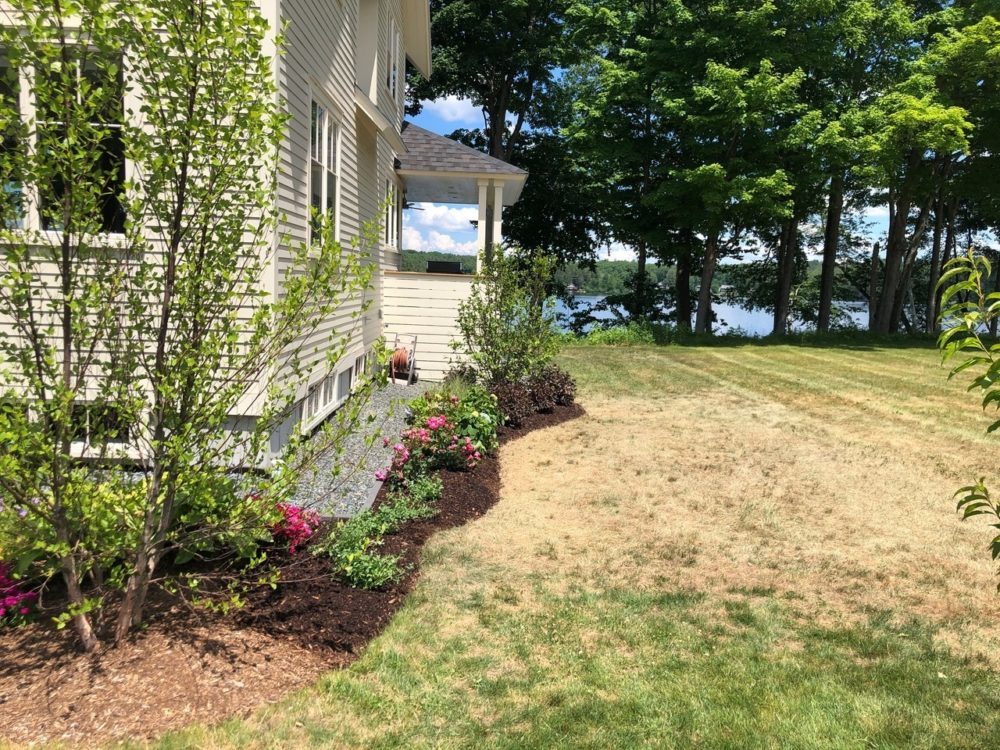
Lawn on a lake

Turf next to water needs special consideration

50 million Americans care for their own lawns, covering an estimated 31 million of acres of grass.  This amount of lawn area could cover all of New England with 80% of this grass residing in home lawns [Ref 1].  Even with these older figures, we can draw a few basic conclusions including home owner’s account for a significantly larger figure than those who have their grass professionally maintained.  We can also surmise that this is a lot grass area to care for over the growing season with potential ramifications.  Furthermore, the volume of products applied by novice, well-intentioned Americans far outweighs that of licensed and insured turf care professionals.  So what’s really at stake here?  What’s the big deal?

There are a few important factors that should be taken into consideration when comparing the perceived financial savings as opposed to hiring a professional turf care company.  First and foremost, you have the environment.  With so many “do it themselves” (who I will call DITs), one can imagine a larger  impact to waterways when material is unintentionally applied too close to rivers, streams, lakes, or storm drains in cities .  Even though the same rules apply within a state, who is going to notice or inspect the DITs?  No one I suspect would be the simple truth.  Well intentioned or not, without training, field experience, and education, this huge amount of DITs simply don’t have the tools necessary to make proper decisions and apply treatments to turf with the desired results. 

This is a unique problem as it relates to other fields as well such as with a plumber or electrician.  A home owner can do his or her own work, with the final inspection being done by a certified, licensed agent in many cases as a final proof of quality.  After all, there is an inherent safety issue with electrical work to those living within the building.  Codes must be upheld and followed for reasons of safety.  What would happen if this same concept applied to the turf industry?  Imagine requiring a final certification or a site visit prior to applying a weed and feed to your lawn, either near a waterway or even in a city.  Regardless of location, products including fertilizers can find their way into a water system when applied incorrectly, at the wrong rate or analysis.  While this might seem extreme, I propose that most DIT’s do not know the majority of Federal or State legislation governing the applications of lawncare products such as herbicides, insecticides and simple fertilizers.

There is a common saying in many professions that they ‘rely on their tools in their tool box’ to get the job done right. These tools can be diversified and help each professional complete a job, whether a mechanic, physician, or lawn care company.  Each business has varying degrees of education, on the job experience, and certification or licensing to attain each level of competency.  I have been in the green industry for 25 years now and have seen the mistakes made by DITs, as well as by those in the industry with a lack of proper training and education.  It seems like common sense that insuring a quality job is done right, with the right tools would be a top priority in any business, including the turf care industry.

I propose that regardless of what is being applied to turf to make it healthier, or to benefit the home owner’s quality of life, the treatment itself must be done to specifications and within the guidelines set forth by each body of legislature to insure our environment is kept safe for generations to come. 

I find it unsettling that so many DITs have access of some of the same professional products I use in formulations readily available at their local hardware store yet without the guidance and licensing required of our business.  In the end, it all comes down to numbers as cited in the opening paragraph of this blog post: the millions outweigh the professionals.  This information is certainly food for thought as you prepare this winter for the upcoming spring thaw and the inevitable flurry of activity outside on your own lawn.  Perhaps this is the year to explore different options, such as choosing a path that makes both your lawn green, and keeps green in your wallet, while obtaining the results you demand in a safe and eco-friendly way.

References:

[1] The Lawn Institute, 1855-A Hicks Road, Rolling Meadows, IL 60008.

Three reasons your lawn looks bad every year

You don't have to suffer with a bad lawn in 2012

Face it, your lawn is ugly and you know it.  You can pretend the front lawn looks lush and green as your lawn tractor mows and creates a dust bowl similar to that of the great depression.  Unless of course your lawn is made up of more crabgrass than real grass?  The crabgrass will take a while to flourish, so this spring there will be more open prairie than visible lawn.  If that’s the case, at least you’ll have weeds to cut by late July. When did things go wrong?  Some lawns can die from catastrophic insect infestations and others a more gradual and slow decline. The most likely causes would be mowing abuse, poor soil care and a host of other circumstances.  So, let’s dig deeper.

Even if you had a lawn at one time, chances are you mow it to short.  I call this syndrome the “military style” mowing tactic. Short, clean, and improper.  With the mower deck only centimeters above the soil, the blade catches chunks of sod, soil and debris discarding the plume of devastation into the air or mower bag.  Like helicopters flying above the enemy, nothing survives and what is left resembles a parking lot in New York City left vacant for years.  Mowing to short heats up the soil causing weed seeds like crabgrass and spurge to germinate.  Mowing short places tremendous drought stress on the grass itself as water loss evaporates from the cut leaf blade.  Mowing short creates a short leaf blade that means less surface area for the lawn to capture sunlight and manufacture food for survival.  Would you prefer all of your teeth or only the front two for eating?  Mow your grass between 2.5 and 3 inches most of the year and you will minimize most of the aforementioned issues.

Removal of grass clippings is another mowing related issue that deprives your lawn of valuable nutrients over time.  Mulching or discarding clippings directly back onto the lawn is a desired practice as opposed to removal while mowing.  Consider your lawn a crop. Each time you remove organic matter (clippings), you deny the soil and turf (your crop) a piece of the food it needs to flourish.  Like recycling, returning that energy and sunlight in the form of clippings is a very good practice and should be encouraged all year long.  That is not to say that on occasion after returning home from a vacation or a heavy lawn growth in the spring that clippings could not be removed to facilitate a better cut.

Neglected soil is perhaps one of the greatest mysteries to a home owner. It’s almost as mysterious as the creation of the great pyramids in Egypt.  You cannot see it; you walk over it, mow over it, and wonder why your lawn looks so horrible.  Unfortunately, soil should support healthy lawn growth or other landscape plants but cannot when there are poor conditions.  While some folks may understand that their soil is sandy or full of clay, what to do about it is another story altogether.  The good news is that changing your soil from unhealthy to healthy is possible with dedicated and diligent effort.  Good soil is like a nice cake or bread mix, it needs the right ingredients in the right amounts.  For instance, organic matter is highly desired in a soil setting as it supports a wide array of micro-organisms which in turn help create a wonderful relationship with turf roots and available nutrient uptake.  Organic content, along with fine clay particles also help retain moisture needed to get through dry periods.  On the other hand, too much clay in the soil can become compacted with smaller air pockets unable to support healthy root growth.  Too much sand in your soil means little water holding capacity but great drainage- ideal for septic systems or wet areas.

The corrective measures required to improve your soil could include annual liming with either calcium or magnesium, topdressing with organic matter in the spring or fall, adding compost tea to enhance microbial life, or even the introduction of mycorrihizae by coating grass seed.  Of course, mulching your clippings, proper mowing height, raking and watering will make a big impact long term.


Lawn & Landscape reflections, planning for 2012

Published by mrgrass2 on December 6th, 2011 - in Lawn Care Companies, Misc.

Lawn & Landscape relections

With the passing of Thanksgiving and December now underway, now is a great time to reflect back over the past growing season.  As you reflect, write down known problems or areas of success while they are still fresh in your mind.  Doing so now will give you an opportunity to formulate a new strategy for 2012.  For instance, you may have had great success improving turf along a new walkway but failed to achieve a level of desired weed control.  Perhaps you never got to plant that colorful crabapple out front by the light post but really want to in 2012.  Make a list of your top 6 goals for 2012 as it relates to your landscape.  Keeping a short list will provide greater focus of resources, time, and ultimately your ability to achieve the goals once spring arrives.  I have found many homeowners with great intentions tackle too many projects simultaneously only to become discouraged due to poor results.  Creating simple, realistic goals will help you achieve real success and at the end of the day allow you to enjoy the fruit of your hard work.

Maybe you want to plant a new tree out front for color, or your back lawn is a disaster and you simply want something green to look at versus bare ground.  Whatever the goal, write down your thoughts so you can think the process through before implementing any changes or new tactics.  Some projects are best done before others such as planting a new tree or shrub, then finishing off the area with new grass.  Why waste time seeding a lawn area only to dig it back up again to create a flower bed or a mulched space for new ornamental trees?  Thinking through your goals sooner rather than later will allow for a better game plan and easier execution when it comes time to implement your new goals.

Improving your outdoor green space can be a very rewarding experience and provide years of enjoyment during our short growing seasons in New England.  After working on thousands of lawns and landscapes, I can summarize and share some of the most common improvements where professional help might be considered to save time and achieve a specific outcome.  The list below consists of the most common exterior green space home improvements I have encountered but is certainly not limited to just these types of projects.

  1.  Lawn renovation/restoration (lime, fertilizer, compost tea)
  2.  Tree & Shrub pruning
  3.  Tree & Shrub removals
  4.  Tree & Shrub new plantings
  5.  Perennial garden renovation/installation
  6.  Flower garden renovation/installation

Lawn renovations or restorations are what I deal with on a daily basis and many folks don’t realize most lawns can be improved “as is” without starting from scratch.  Most clients are looking for improved turf color, density, and less weeds or bugs.  While the prescribed treatments will vary, most lawns can be dramatically improved in just one year with diligent and professional care.  Tree and shrub pruning is an often neglected area either not being done at all or done incorrectly and may cause future growth and (structural) damage.  Pruning done by a professional on a routine basis is actually less expensive than waiting numerous years not to mention the tree may be injured thereby predisposing it to insect, disease, and ice/snow damage.

Tree or shrub removals usual involve overgrown or dead/damaged plant material that may be a hazard to your home or yard.  Removals can improve a view or add sunlight to a damp, shady location.  Planting new tree or shrubs is a very common activity and usually is on the spring “to do list”.  Be aware however that problems with planting can occur when the planting depth is improper and/or the wrong tree or shrub is placed in the wrong location.  While the job may look sweet and seemingly be destined for years of enjoyment, I am called in (sometimes years later) to diagnose a declining plant for the reasons I just mentioned.  Another fun green space project is the renovation, creation, or expansion of either flower and or perennial beds.  These types of projects can be very enjoyable as the plant material is generally small, readily available, and easy to plant.  While most of these types of goals can be successfully achieved by a homeowner with the patience, research, and time – most will opt for professional advice if not assistance at some point in time.  The key to improving your outdoor green space is keeping things simple and planning out your projects over the winter so when spring arrives, you have a strategy already in place.

July lawn tips, what to do when you take a vacation

A few easy steps can save your lawn during summer vacation

July is a month where your home lawn can be easily neglected due to many New Englanders seeking out the beach or mountain lakes on summer vacation.  There is a short checklist that can prevent some issues and provide peace of mind while you are away enjoying those early morning beach walks.

Before you depart, make sure your lawn is cut the day before you leave if possible.  If you have a mowing service, the task of mowing is not really an issue.  If you mow yourself, a cut the day before will normally give you a solid 7 to 10 day time frame in which to return without the lawn having grown too long.  In fact, during a hot July period, it is better to go 2 weeks without mowing if the air temperature is in the 80’s and rainfall is absent.  If you return and your grass is really tall, such as over 6”, removal of your clippings is recommended or be sure to rake up the rows of cut grass.

Have your lawn inspected for insect activity; left unchecked, under ideal weather conditions you can lose a lawn in days without curative action.  I have seen a number of lawns with sod webworm damage with the characteristic tan moth taking flight as you walk near.  These small patches are fist size in nature and can coalesce into larger stripes or patches if not treated during the summer months.

Although this season has been on the humid and warm side, promoting diseases over insect activity, a professional lawn evaluation is worth the peace of mind.  If your lawn has confirmed disease issues, it may well be worth a fungicide application to “clean things up” during the July/August period where serious injury can occur.  Summer diseases can easily appear to be drought or insect activity.  Hot weather and warm nights can bring on blotches and spots in mere hours without you realizing the culprit.  You may awake and look out the kitchen window only to ask “Those patches were not there yesterday, were they?”  Thatchy lawns are particularly prone to summer patch diseases, manifesting as scars and pits when placed under stress.

Irrigation or lawn watering is helpful during dry periods but is not necessary during a standard summer vacation.  If you have a sprinkler system or a friend to water, be sure to water in the am or day versus late afternoon, thus minimizing disease issues.  As always, infrequent deep watering is preferred over frequent light watering to promote deeper root systems and minimize disease.  A 1hr watering every other day is generally preferred over a daily 15 minute watering.  Don’t let your lawn stop you from enjoying a great July summer vacation.

NH lawn care companies can save your lawn

Published by mrgrass2 on April 9th, 2011 - in Lawn Care Companies

There are numerous lawn care companies in NH which have the experience, service, and program options to serve your lawn care needs.  In previous blog posts labeled “researching lawn care companies”, I explored some critical points separating a great lawn care company from a poor one.  Most people will seek out a professional lawn service because of a lack of time, having failed themselves, or because they are seeking an alternative to the large box stores which simply have a limited selection of bagged products.

Creating a healthy, beautiful, and safe lawn is much more than applying a bagged material a few times a year, mowing, and watering during drought.  If this was the case, most folks in NH would have a golf course lawn as portrayed on TV.  Unlike the commercials which portray a “do it yourself” lawn program as a care free weekend activity, obtaining that carpet of green is anything but simple.  Most home owners will agree, creating a healthy green space is time-consuming, expensive, and ultimately does require a degree of skill and knowledge.  Most homeowners will start out optimistic and give that canned lawn program a shot, but with minimal success and results- these folks seek out the professionals only after something bad has occured.  One wrong diagnosis or misapplied bag of step 2 can result in hundreds, if not thousands of dollars in renovations.  A damaged lawn is frustrating and unpleasant to view.

Don’t believe there are not options beyond what you see advertised as mainstream lawn care on TV costing millions of dollars.  You’re locally operated, professionally trained, licensed, and experienced turf care managers can recommend and have access to wonderful things.  What things?  The national chains have limited products and are told what they can and cannot use in their “one size fits all” program.  This philosophy stems from bulk buying power and simplistic treatments which places control and power at corporate headquarters out-of-state versus the office servicing your lawn.  Fortunately, most family owned or local turf care companies actually offer more services than the large national and franchised companies within NH.

Programs exist which address not only turf color but soil health, organic matter, friendly fungi, and other underlying situations that promote a safe and healthy lawn.  Before you decide to order that cheeseburger with a small fry, consider the alternatives like compost tea, sea kelp, grass seed coated with beneficial fungi, and natural fertilizer.  Help support your local economy, contact your local lawn care professional today and get a free estimate this spring!

How to find a great lawn care company in NH & VT

Published by mrgrass2 on March 9th, 2011 - in Lawn Care Companies, Misc.

Find the right lawn care company this year


On the surface, many lawn care companies appear exactly alike as it relates to a phone book or newspaper advertisement.  If a web site is available, you are likely to see images of a thick, green lawn surrounded by bold tag lines such as “Quality service”, “Five step program”, or “Satisfaction Guaranteed” among many others.  Before you start shopping, write down a short list of what you are looking for- even if you don’t know what you want.  Let me explain.

What are some of your priorities?  Less weeds perhaps, maybe a healthier lawn is your general desire?  Do you prefer natural products over traditional ones?  The final consideration should be the budget or price as any reputable company will prioritize treatments according to results and how to get there as it relates to your wishes.  Said another way, you care about your lawn and have at least decided to seek additional professional help; regardless of the underlying reasons.  While pricing is certainly an important component, what you get for that price varies between lawn care companies.  Experience, product choice, and even rates applied can range from “light” to “generous” when it comes to the amount of material used at your home or office.

While you may not have the time or desire to execute a properly designed turf enhancement program, there are plenty of great companies that will not only make your lawn look better, but make you smile when you look out your window.  All lawn programs are not created equally.  All lawn programs have underlying similar themes but the product choices and execution of the program are critically different between certified, licensed lawn companies.  Do you know anyone who uses a lawn care company?  If so, who do they use and why?  Often you might have heard “street talk”, conversations in passing good or bad of experiences with either local or distant lawn companies.  While national lawn companies may boast the cheapest price, the savings in results, service, billing, customer service, and problem solving skills tend to be inconsistent and difficult to control between offices.  Along the same theme, is supporting your local economy important?  If so, look for lawn care companies within a 30 minute drive of your home versus 1, 2 or more hours away.

What program options are you interested in?  Is your preference toward Natural or Organic fertilizers and treatments of compost tea and sea kelp?  Maybe your interest is simply removing all of those juicy weeds that inhabit your front lawn!  Keeping an open mind, there are many roads and options that can lead to a healthier, greener lawn.  Some lawn products take longer to see visible results while others are faster or “better” simply by working on technology.  Who made the lawn program you are considering?  Is the program a corporate “white bread” duplicated office after office, or are the materials handpicked and the program handcrafted by a smaller company?  These are all very good questions to consider while selecting a new or switching to another lawn care program.    

Once you have a list of priorities and have considered some of the questions put forth in this blog post, you are ready to act!  Good luck in your quest and may your phone call or e-mail be answered promptly.  Get ready for spring!

Review your lawn contract before renewing

If it seems to good to be true- you may be right

Did your doctor ever tell you to get a second opinion?  Hundreds of commercial lawn care contracts will be mailed out shortly to residential homes in remote parts of NH and VT.  Even more lawn contracts will be mailed out to commercial customers in the hopes that those in the appropriate position will sign, mail, or simply fax it back with no questions asked.  I propose that each contract deserves not only a second opinion, but a thorough examination line by line item.  The national and larger regional lawn care companies typically roll your program over from year to year.

Most lawns are not being examined to determine true needs but rather recycled in archives from prior years like a CD player on repeat.  While this automated process may approach adequate at best, I sincerely doubt you are receiving a turf care program worthy of your hard-earned dollars.  Furthermore, I doubt most existing clients even understand what they are receiving and why versus what is available in their market area.  Let me expand on this theme.

Many remote lawn accounts are labeled and classified as ”commercial”, with most customers unaware of this practice.  These kinds of accounts are processed at a high volume utilizing heavy machines called Turf-Trackers or even tractors.  These machines do a decent job on large properties or fields but are anything but light and are not ideally suited to home lawns or smaller settings.  An inexperienced operator can easily cause damage while running the machine over frost covered lawns, shaded locations, and especially slopes.  Turf can be easily torn, compacted, and ripped up without careful attention from the driver.  These machines make it easy to operate at an aggressive speed as they work to achieve the goals set for them by the larger corporate office.  If these facts don’t cause you to raise an eyebrow, please read on.

Unfortunately, many of these “commercial” contracts are recycled revenue without any fresh investigation data to support the renewal.  In fact, I would wager that most if not the majority of these accounts are seldom looked at beyond the production dollars they represent each year.  Simply put, the large national chains are usually too far away and their attempts to service remote regions often severely stress their limited staff and outsourced customer service centers.  Most national lawn care companies utilize lawn programs like McDonald’s “Happy meals” except without the toy because you get a few fertilizer visits, grub control, and a lime treatment.  Who would question that?

Does your phone call get forwarded to a call center or does a real person answer your call?  Are you able to reach your lawn care office or do you even know where it is?  Are you supporting your local economy or something much larger?

How can these large lawn care services claim and advertise to be local when they drive nearly 2 hrs to service lawns in remote areas of NH beyond their primary service market?  Is that local service?  Again, any company that pre-mixes fertilizer in a liquid medium and then applies it to every lawn in a single day is doing their clients a basic injustice as outlined in my blog post (http://mrgrassblog.net/2010/04/22/price-and-the-…awn-treatments/ ‎).  Mixing concentrated fertilizer into a liquid is an easy and inexpensive way to administer a lawn program.  As I said before, yes it works well for some lawns but not all lawns.  You get exactly what you pay for with this type of treatment, a quick buzz of green.  There are lots of natural and organic alternatives to this kind of turf care.

Before you sign on the dotted line, before you pre-pay for your entire year upfront- get a second opinion from a local lawn care company.  I welcome the questions and the challenge to take your property to the next level.  If you are not in our service area, I have companies I can recommend to you- just leave a comment to this post.  Even if you decide not to make a change, doesn’t it just make sense to get another opinion like a car or house repair?  Don’t just sign without thinking about what things could be like in 2011.  I know it’s easy to just send the lawn contract back, but a free second opinion from any other turf health care company is time well spent.  Make this winter the time where you decide to explore what has been going down on your lawn in the past and why!  Support your local economy and research who services your town for lawn treatments.  Exploring new options can be educational, fun, and you might even receive better results!

© Copyright 2009-2012 Chippers, Inc. All Rights Reserved.