Posts Tagged ‘lawn damage’

Chinch bug lawn issues

Published by mrgrass on May 20th, 2013 - in Lawn Pests, Bugs & Insects


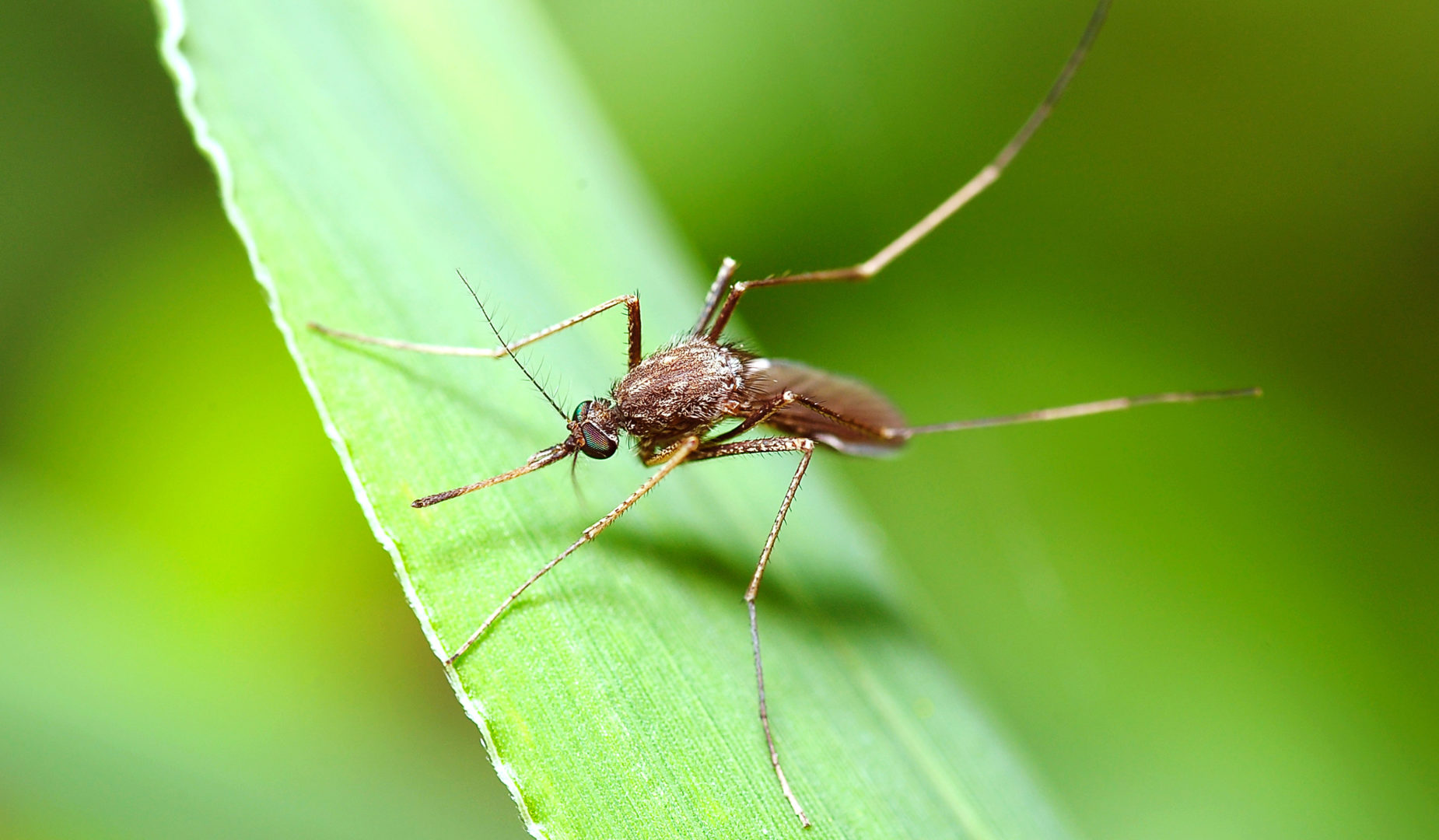
Chinch bugs are small insects that can make your lawn appear as though it’s dry but is actually slowly killing it before your eyes.  The adult chinch bug is a small insect that can be seen darting around in the thatch layer or surface of the lawn.  The adult is black with a characteristic white diamond on its back while in the young stage, it is bright red and orange; very easy to see if you look close enough.

The chinch bug does damage by piercing the stem of the grass blade and sucking out the juices like a vampire.  Unable to restore or keep up with this moisture loss, turf slowly dies and appears as yellowing or brown patches that can coalesce into larger areas.

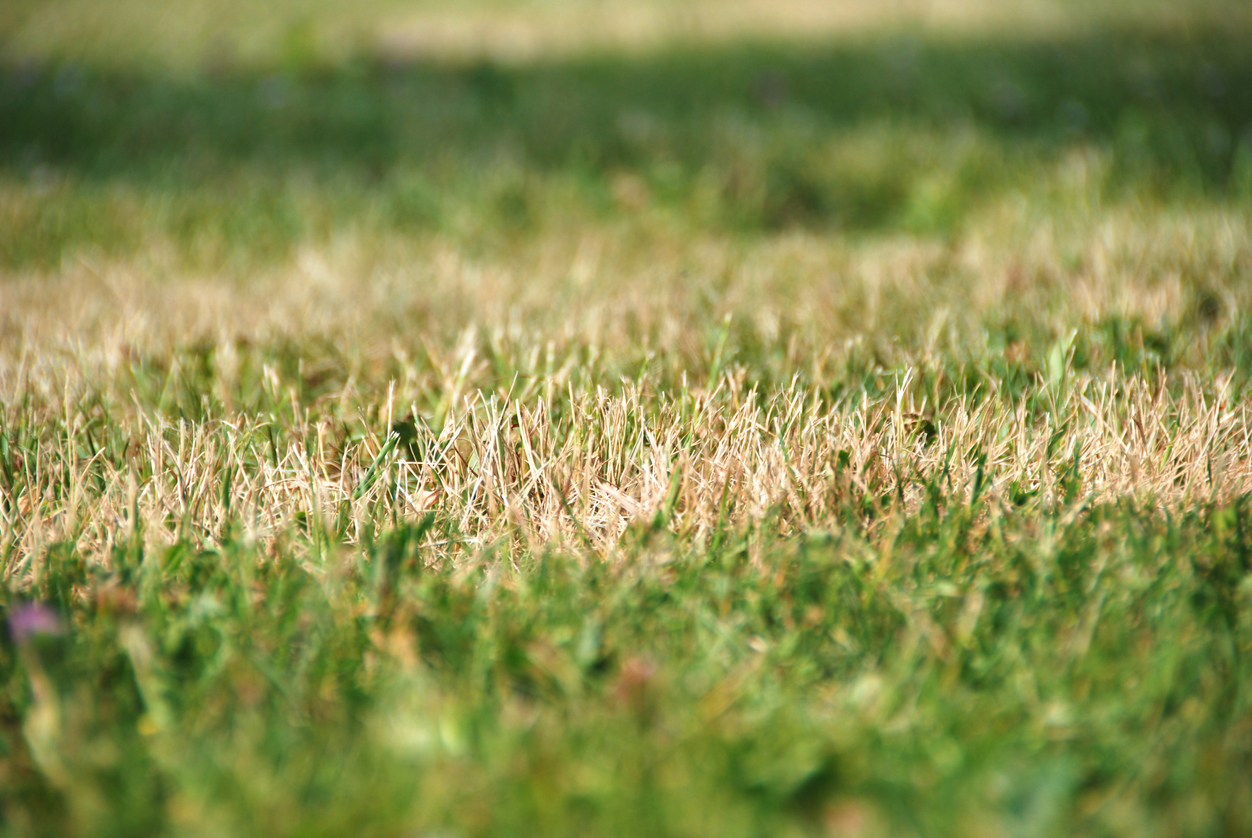
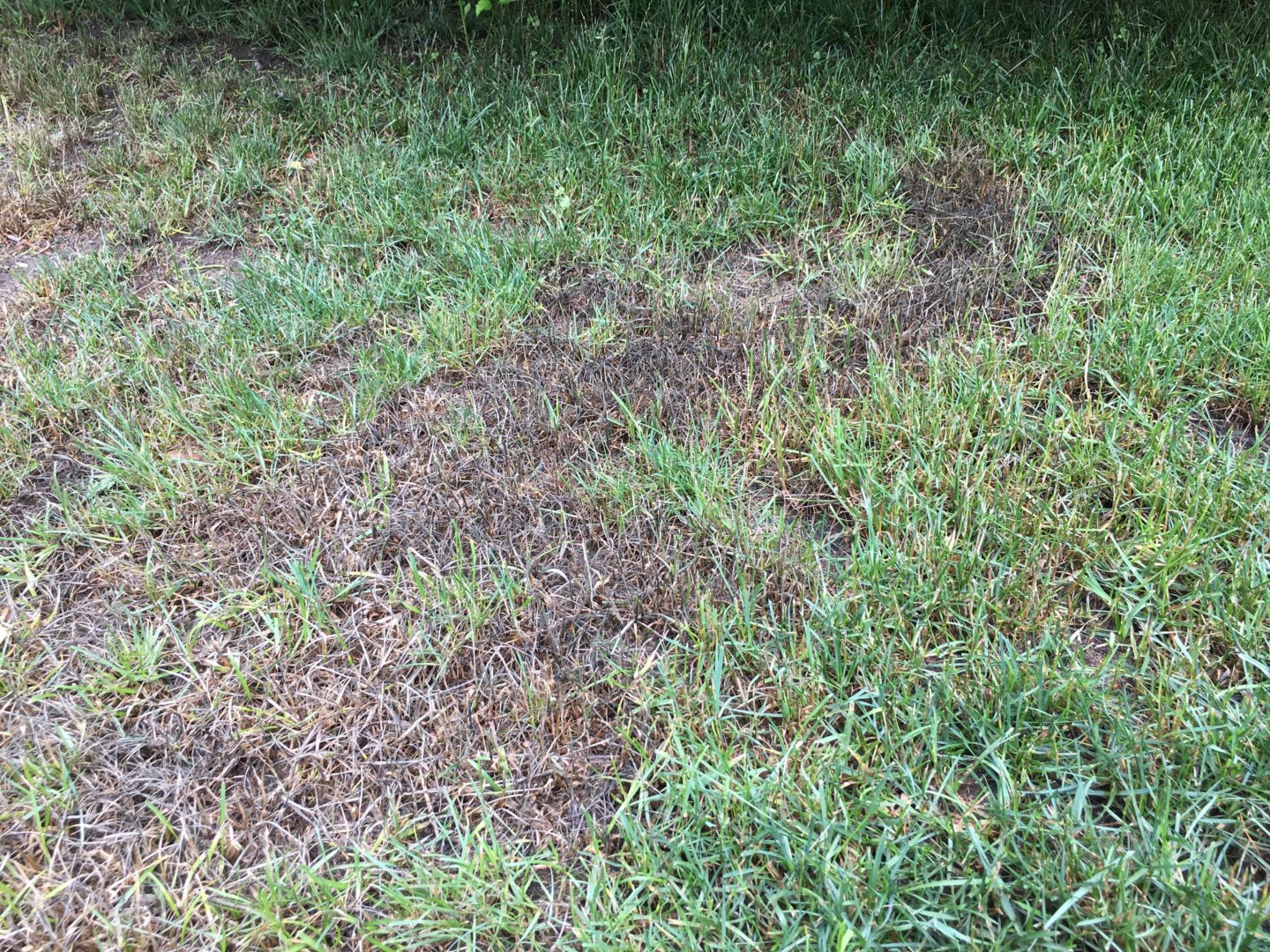
New chinch bug damage on a lawn


I have included two pictures taken last week that clearly illustrate chinch bug damage Notice that the picture (seen above) of the more recent damage appears as small brown areas that can easily be mistaken for drought stress or a hot spot in the lawn. The rear lawn (see below) is severely damaged and the front lawn still under attack from chinch bugs overwintering and beginning their reign of terror this spring. The damage appears as razor stubble, for lack of a better analogy, where the grass is still rooted but the tops are dead, leaving only a small piece of the crown and old leaves behind like razor stubble or five o’clock shadow.  This lawn will be treated once to knock the chinch bugs back so no further damage occurs. Seeding will be done in the future to restore lost turf. 

Old chinch bug damage on a lawn

Left unchecked, chinch bug populations can explode in one season, destroying large portions of your lawn right underneath your weekly mowing schedule.  What you think is a dry lawn is really a lawn under attack, perishing from the small, yet determined chinch bug.  Since chinch bugs can have two full generations per year in NH or VT, a lawn that becomes infested can quickly succumb in a matter of months, requiring treatment and renovation involving seeding and thatch removal.

If you suspect your lawn does not look right and has unusual browning or coloring, call in a professional before a costly lawn renovation is necessary.

Dry spring brings out lawn pests in force

The chinch bug is in the middle

I was on my stomach trying to get this picture. Chinch bugs are small and very shy, they always try to run and hide.

A thatchy lawn in the sun is a prime location to experience chinch bug damage, especially in a warm, dry spring.

I visited many lawns this past week infested with grubs, chinch bugs, and even ticks.  The picture below illustrates classic chinch bug damage with active chinch bugs feeding as adults.  The  picture to the right is that of an adult chinch bug.  The lawn was thatchy and not a current client but certainly needs some help from my program.  Left untreated, these adults will have lots of kids and spread to other areas, causing further damage this spring.  Recommended treatment for chinch bug is a surface insect control, either organic or traditional in nature to stop the feeding.  Aeration and seeding may also be warranted to help restore the turf area for a more pleasant view versus brown thatch.  If you suspect insect damage, be sure to contact a local professional for a lawn inspection, not an over the phone lawn quote from a satellite.

Classic chinch bug damage in a NH lawn

July & August can bring out the worst in a home lawn

Classic mid summer crabgrass outbreak

Midsummer weather can put even a great looking lawn into a slow dive of despair without careful attention.  As the heat kicks into high gear, soil temperatures reach their smoking point and crabgrass seeds begin germinating in earnest, popping like corn in a microwave.  Limey green crabgrass plants appear virtually overnight exposing vulnerable areas along driveways, patios, walkways, mailboxes among others.  Where did they come from?  How can they grow so fast?  Ah, the games have just begun!

If you have not watered and your lawn is cut short, now is when your thin lawn becomes choked out with crabgrass plants the size of small cars.  During hot, humid weather, cool season grasses will stop growing, sitting idle while crabgrass seemingly grows an inch an hour, basking in the searing July heat.  A weak or thin lawn, or those lacking a pre-emergent crabgrass barrier, are now at high risk for a crabgrass invasion that will only cease when school reopens.  While post-emergent sprays do exist, spraying at this stage is like using a garden hose on a house fire: it’s best just to let nature take its course.  Measures should be taken in the fall such as aeration, overseeding, lime, and turf thickening fertilizers to help prepare the lawn for the following spring.  A healthy lawn resists this invasion, and although areas may see some crabgrass, it will not be to the point where one could harvest the greenery for salads.

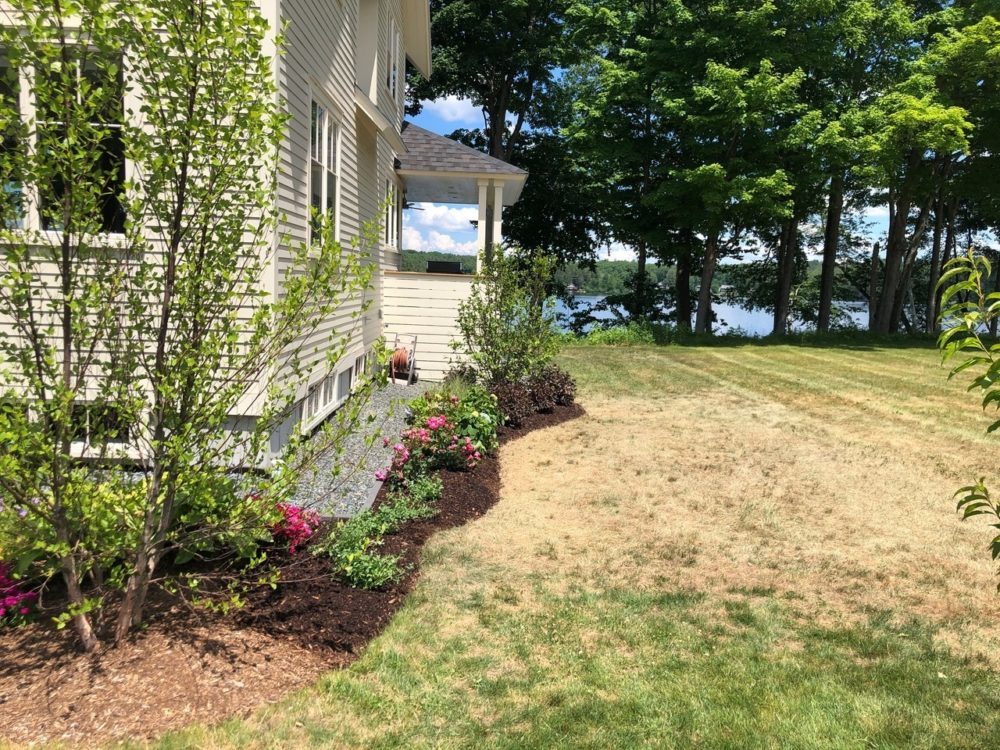
Damaged lawn

A casual glance toward the interior of your lawn may reveal disturbing patches and blotches of varying sizes and colors ranging from brown to white.  How can this be?  What went wrong?  Like a good CSI episode, it is time for the facts to speak and rule out the guessing.  These issues generally fall under environmental stress such as heat, sun scald, or some other non-pathogenic source.  Ruling out diseases can be very tricky depending upon the weather, timing, and location of injury.  This summer has seen a significant upswing in disease-related damage ranging from pits and scars, to unusual patches.  Preventative measures can be taken to help clean up your lawn with either traditional or organic treatments.  Insects are perhaps the easiest to detect given their predicable nature and timing during the season.  Now is a perfect time to treat for grubs, sod webworm, and chinch bugs using either organic or traditional materials.

Doing some simple things properly for your lawn during the next 6 weeks can reduce unsettling issues arising from disease, insects, and environmental stress.  Summer is generally not the best time to spray for difficult to control broadleaf weeds like ground ivy and violets since high heat and low soil moisture content reduce product effectiveness.    If you think you have an invasion at your house, get it checked out and maybe there is a solution to either stop the problem or slow the damage.  Don’t let your lawn scare the neighborhood children – plan ahead and keep it clean and green!

Milky Spore Lore & White Grubs in your lawn

According to a 2008 University of New Hampshire publication on Milky Spore disease, there are more reasons NOT to use this product than to use it in your home lawn.  Milky spore has been around for decades and was the first biological control means for Japanese beetle grubs.  Milky Spore comes in a powder and consists of a bacteria.  The first reason not to use milky spore was the design, it was manufactured to control ONLY Japanese beetle grubs- unfortunately there are many more!  Other turf damaging grubs in NH & VT include Asiatic beetles, European and masked chafers, June and May beetles and armyworms.  So now you understand that even if milky spore could work, you would be controlling one grub out of many, not good odds.

The second major issue not to use milky spore is you must have Japanese beetles in your lawn in sufficient numbers to promote the bacterial population enough to expand and spread out in the soil.  Therefore, if you do not have a large japanese beetle population, one where you would likely see damage- why bother?  The third reason not to use milky spore in NH and VT is the fact that soil temperature must be between 60 and 70 degrees for 3 months.  The high soil temperature necessary does not occur in our region and the bacteria can take over 4 to 5 years to build up, under ideal conditions, with a high population of Japanese beetles!  Wow!  You might want to go buy that lottery ticket today versus buying milky spore.

The Fourth reason not to use milky spore relates to how Japanese beetle grubs must ingest or eat the milky spore in the soil, not come into contact with, but eat it.  To summarize, even under ideal conditions, purchasing and using milky spore disease is a serious waste of money and time especially since there are more effective organic/biological methods like Nematodes. 

Nematodes are microscopic worms that are applied to the soil in a water spray.  The nematodes then swim and attack the grubs while swimming in water between the soil particles.  Nematodes will attack and destroy all of the grubs found in NH and VT listed above.  They will also attack sod webworms!  Since there is no “golden bullet”, Nematodes must be watered into the lawn or they will perish so that usually means applying them in the rain.  The soil must have sufficient moisture content and you must target the grubs at the right life cycle stage.  Having a professional apply Nematodes is the only true logistical option at this time, and our company does provide this service in our market area.

There are also a large range of new products on the market, some that do not even require a signal word because they are so applicator and environmentally friendly.  In some states like Vermont- you must have a pesticide license even if you are applying organic products since it is considered a pesticide even if it is organic.  Please keep in mind some organic products are just as dangerous or more so than some newer manufactured products.  There are several key points to remember before using any “pesticide”, the first being is a treatment required and why?  Secondly, what are the best material(s) to use for the job with the least impact to the environment and applicator.  Do we need to treat the entire lawn or just a portion of it?  Can we live with a small amount of damage and renovate later, only treating that one area or should we treat a larger area with a different product at a different time?  These are all questions best left to the professional because without knowing insect or disease life cycles, product components, mode of action, and application method- things can go wrong real quick.  This does not take into account the potential waste of material and use of a pesticide that should not have been used, regardless of composition.  Doing the right thing, at the right time is harder to do than you may think.

I do hope you have learned something new today or perhaps confirmed something you already believed in regarding grub control.  In any event, as fall fades into winter- be sure you are ready next spring because if you do have grubs- they will be waiting and you should have a game plan lined up this winter to address that very issue.  Thanks for visiting my humble blog!

Be sure to the visit this UNH video link  http://extension.unh.edu/agric/turf/media/lifecycl.htm

Fall lawn treatments in NH & VT

Fall is an excellent time to repair the damage caused by the summer of 2010.  Now is the time to act.  Now is the time to prepare your lawn for next spring by adding new grass to brown or bare spots.  Even if your lawn seems ok, there is always work which can be done to improve it for next year.  If your lawn suffered from the hot, dry weather of 2010 don’t think you are alone.  Most grass suffered under minimal rainfall, above average temperatures, and brutal heat which in turn promoted insect and drought damage.  Don’t be fooled and think your lawn is brown simply from a lack of water or heat.  Any brown areas in your lawn in September or October can be prime indicators of chinch bugs, white grubs, sod webworms, or other noxious turf pests.  If you are in doubt, have an expert examine your lawn because many of these pests will not go away.  In fact, they will overwinter and return next spring only to continue the population explosion and expand their dominion conquering your lawn and raising the flag of victory.  The problem is, the flag is not your’s and will only mean expensive renovations and possibly drastic measures to eliminate the enemy.

What procedures should you consider?  Aeration is at the top of the list and can be done up until the ground freezes in November.  Seeding after aeration is called overseeding and is a great procedure.  For most of us in Upper Valley region, we can seed well into mid October and still expect decent results in most years.  Depending upon weather conditions, seeding later is a roll of the dice and results may be reduced by the onset of early snow or unusually cold weather.  Have sea kelp applied to your lawn to improve root density and promote organic matter.  Let us not forget lime, our old friend who will adjust soil pH so fertilizer works better.  Of course, applying a high potassium fertilizer in addition to a standard balanced fertilization is wonderful- especially in October.  Potassium thickens cell walls and makes the grass more resistant to drying out, ice and drought damage.  Many benefits are derived from a late season balanced fertilization which is not intended to push top growth, but become stored for use next spring in the root system and soil environment.  The tougher your grass, the better it can withstand ice, cold, and the drying winds of winter.

In summary, a lot of things can be done in a very short period of time to provide a whole lot of benefit to your home or commercial lawn area.  Don’t miss the window of opportunity to enhance your brown lawn this fall.

Fall Seeding replaces crabgrass

A very common question I hear is, “When is the best time to seed your lawn?”.  My answer is usually the same due to a few basic factors.  Fall wins over spring for a few key reasons.  The first being the soil is already nice and warm- ideal for faster seed germination with sufficient moisture.  Spring soil is usually cold and even after weeks of warm weather- soil temperatures do not reach into the low 50′s until mid to late May.  Any colder and the seed tends to stay dormant and dry out.  Therefore, fall is perfect for seeding since the soil temperature is already much higher than this- allowing for faster germination periods which means a better lawn for you.

The second reason is the competition- crabgrass and annual weeds like spurge and oxalis are just germinating in the spring- growing and fighting for space, light, water, and nutrients.  Spring seeding and especially summer seeding can often spell disaster because crabgrass will grow so much faster than the seed you planted.  This is an unfair competition because soil laden with crabgrass seed will win every time- even more so in hot, dry weather.  In the fall, these plants are all dying!  Hurray!  Yes, the bad guys are dying and cannot harass your new grass.  Therefore, you have two very big reasons to seed in the fall over the spring because its your time and money.  Why not take advantage of the next 6 to 8 weeks and do a little lawn fixing?  It will be an entire year before you see can seize this opportunity again.

If you seed now, you can apply a crabgrass barrier next spring and help suppress all the bad guys I mentioned above.  If you wait to seed until spring, you will have to forego crabgrass control- unless you pay for a unique product that is VERY expensive which allows seeding and a crabgrass barrier to be applied at the same time.  For most folks, seeding in the fall and applying a solid barrier in the spring makes the most sense- don’t make the fight uphill, go with the flow and take advantage of each season according to the life cycles and maximum benefit you can derive!  Get seeding today!

Brown lawn? Look to aerate this fall.

Core aeration is a mechanical process that extracts cores of soil, thatch and grass from the surface of the lawn.  This increases nutrient availability, water penetration, soil air exchange, and reduces compaction.  All of these benefits lead to a healthier lawn.

Aeration can be done any time of the year, but typically it is done in the spring and or fall when soil moisture is greatest to insure good plugs.  In addition, any lawn can be over seeded after aeration in order to add hybrid grasses to help thicken up an existing lawn or thin areas.  Aeration is a great process and should be done annually to help maintain good soil health while minimizing compaction.

Core aeration should not be confused with dethatching or power rakes, a different machine which tears and rips turf- often causing more damage than good.  Aeration is a professional means to manage a turf area that is often under care such as fertilizer and lime treatments.

What are the benefits of Aeration?

-      Increased moisture penetration since the holes open up space for rain to reach the root system below.  The surface of the soil is hardened from high heat and summer drought.  A lack of rain makes the surface of the lawn much harder to loosen up due to the baking action of summer heat. 

-      Increased oxygen exchange (important for healthy roots) especially in compacted and dry soils.  Punching holes in the lawn will physically allow air to reach into the surrounding root systems, even as the hole begins to break down and fill back in with soil next spring.

-      Reduces soil compaction (especially soils high in clay) caused by those summer parties or high use.  Compacted soil does not promote healthy roots in grass or trees for that matter.

-      Increases penetration of fertilizers and other lawn products due to the holes being made.  The pellets or flakes simply roll into the plug and dissolve for faster results.

-      Increases rate of thatch decomposition due to micro-organisms being brought up to the surface in the plug itself.  There is no need to rake aeration plugs off a home lawn as they breakdown on their own in a short period of time.

-      Increases root development due to the vacant space created by the aerator tine.  The turf roots can expand outward and beyond in search of water, air, and nutrients in the soil.

© Copyright 2009-2012 Chippers, Inc. All Rights Reserved.