Posts Tagged ‘fall seeding’

Grass seed facts

Large grass seeds include tall fescue and ryegrass


Before you buy grass seed this fall, be sure to know what types you are buying and where you plan on using them around your house.  Failure to know common grass seed facts can mean the difference between success and failure.  The differences in grass varieties are as wide as a sports car is to a truck, they each have advantages but both have down sides too.  Such is the case with grass seed, some tolerate shade, others prefer full sun while others are best used for heavy use or dry conditions.  Each grass type has its own set of characteristics and knowing these can be a huge advantage in growing a healthy lawn.  This is why blends exist, several different grasses mixed in one blend to cover a wide array of growing situations.  The dilemma arises when the wrong grass type or even a blend is used when the proper grass selection would be more successful.  Shopping for grass seed is not an easy task and the packages are anything but cheap.  A little research and knowledge before your purchase can save you not only money, but time.

Since fall is the best time to seed, I am going to review the basic turf types and hopefully you will be enlightened enough to use this to your advantage in improving your own home lawn.  I have found that few people know how much seed to use, and they either put down too much or the wrong kind; perhaps even both!

You have to read the grass seed label to know what you are buying

In New England, we like to grow what we call “cool season” grasses which prefer temperatures in the 50’s to 70’s.  Anything approaching 90 causes heat stress resulting in browning or white sun scorch.  These grasses include Kentucky bluegrass, perennial ryegrass, annual ryegrass, fine fescue, tall fescue, and bent grass.  Within these grass types, there are many hybrid types, each with their own resistance to disease, drought, shade, insects, and ability to handle wear and then recover.  As you might expect, choosing the right grass seed is extremely important, especially when picking out a blend based on facts versus how pretty the package looks.  Bottom line, you pay for what you get when you buy grass seed.  If you buy cheap grass seed, you are likely purchasing old seed or annual grass which means come winter, your grass dies and you get to start over again next spring.

Kentucky bluegrass has great color, good density, but takes 21 days to germinate and only has fair wear and shade tolerance.  This is why planting sod that is comprised of mostly bluegrass in the shade is not a good decision because it will simply thin out and eventually need seeding with the right grass such as a fine or tall fescue.  Kentucky bluegrass has only fair wear tolerance, but compensates with good recovery abilities when injured.  Bluegrass creates thatch and requires regular aeration to keep in good health.  Kentucky bluegrass is a very small seed with over 1 million per pound, so while you only need 2lbs per thousand square feet, its small size and desirable characteristics makes its per lb price very high.

Kentucky bluegrass is a highly desired turf grass

Perennial ryegrass works best when used in overseeding in an existing lawn since it works well with most other grasses.   Unlike bluegrass, both perennial and annual ryegrass have good wear tolerance but has a tough time recovering if damaged.  Perennial ryegrass seed is fairly large ranging in only ¼ million seeds per pound.  As a result, you need at least 8lbs per thousand square feet to seed your lawn versus 2lbs of Kentucky bluegrass.  Perennial rye is sensitive to cold winters and ice so be careful where you let snow build up along walkways.  Annual ryegrass is best used where erosion might be a problem and a quick cover is required, same for perennial as these grasses germinate the fastest of the bunch.

Tall and fine fescues are the last main grass types to review.  Tall fescue is great on sports fields, high-use traffic areas, and has good drought tolerance.  Tall fescue has a thicker blade but newer hybrids this is not as noticeable because certain home owners do not like the wider blade found in tall fescue.  Older varieties of tall fescue are often mistaken for grassy weeds in a manicured lawn because of their clump growth habit and wide leaf blades.  Tall fescue is the largest of grass seeds and again comes in at a little under ¼ million seeds per pound with the same seeding rate as perennial ryegrass.  Tall fescue does fairly well in shade, so if you have had trouble before, give this turf a try.

Fine fescue is a soft, thin-bladed cousin to tall fescue and is often well suited for partial shade or in a blend with bluegrass, as the two do well together.  Fine fescues come in a variety of names like hard, chewing, or even red.  Most do not like wet soils but can do well in dry shaded situations.  Fine fescue is not the grass to use alone in full sun or as a sports turf given its nonexistent tolerance to wear.  Fine fescue has under ½ million seeds per pound, so normal seeding ranges from 2-4lbs per thousand square feet.

Bentgrass is not considered a desirable turf in a home lawn due to its growth habit.  Bentgrass requires a very short cut to ¼ inch while most lawns require a 3” cut; such a low cut would promote a wonderful bentgrass putting green but ruin a normal lawn.  This is because bentgrass puts out leaves where it is cut, up top unlike other grasses which put up leaves from the base down at the ground level.  This different growth habit makes bentgrass ideal for golf course use but makes it a weedy grass in a home lawn, often found in small patches which appear lime green in color with brown stems.

Fall is the best time to overseed

In general, each of the grasses above is best used in conjunction with each other in specific blends for optimum use.  By evaluating your lawn’s growing environment, it is much easier to pick an appropriate grass blend which will do well once planted.  The key lies in the percentage of each specific grass in a given blend.  While you can buy any of these grasses alone, you can find great blends which are suited to some of the conditions described such as play, shade, or full sun.  Most grasses you will find in a hardware store are found in specific blends or by name.  The key to finding the right grass varieties lies on the label where they are listed by percentage of the mixture.  Just liking reading a label in the supermarket, you have to read the label in order to determine what you are actually buying.  Purchasing a grass blend just because it says “patch mix” or “play blend” can be misleading and may actually get you the wrong grass for your situation.  Only by reading the label on the blend can you properly tell what grasses you are actually buying.  In general, you get what you pay for when it comes to seed pricing so don’t skimp on quality or quantity!

In my business I use four to five different blends of grasses with each containing four to five specific grass types. This is necessary for the variety of lawn applications, such as overseeding, and complete lawn installations while keeping in mind the site requirements.  Choosing the right grasses is very important for long term success of your lawn ecosystem.  Failure to over seed this fall, in order to add more turf to a damaged lawn system, can mean the difference of a great lawn in 2013 or just surviving.  Given that New England has experienced a record setting heat wave this past summer, it makes solid agronomic sense to plan on some kind of seeding in the fall of 2012.

Address the weak or damaged spots in your lawn this fall before its time to carve the turkey dinner, because by then, it’s all stuffing!

Fall is the best time to improve your lawn in NH & VT

Fall is the best time to repair or seed a lawn in NH and VT

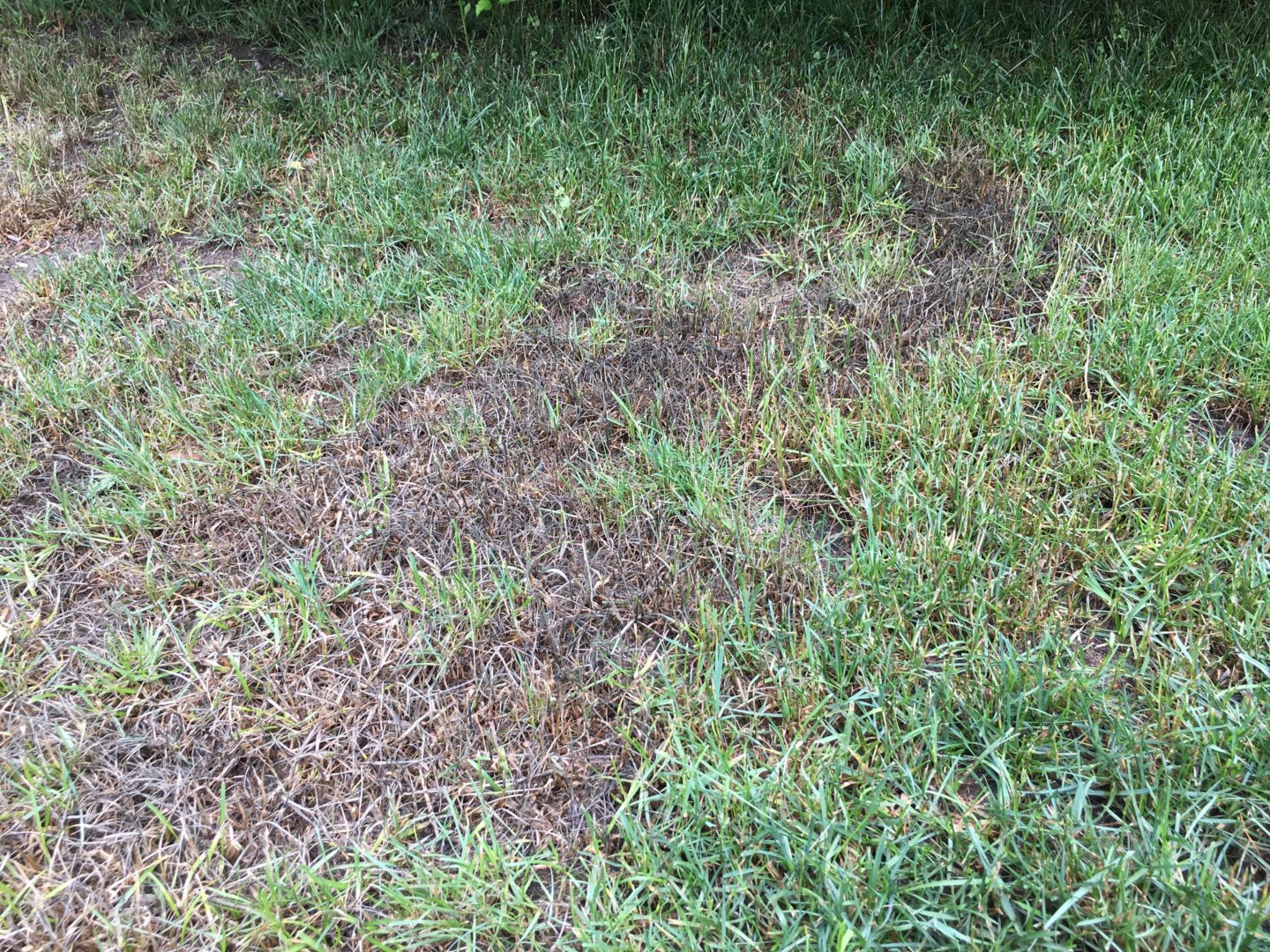
Fall is the best time to repair your lawn after experiencing a brutal hot summer.  Although your lawn may contain summer annual weeds like crabgrass, oxalis, spurge; take heart that their time will soon be coming to an end in September.  September beckons turf renovation in order to help restore some order by repairing any damage incurred since spring.  Common lawn damage results from drought, weed or insect infestation, or even disease and must be repaired in the fall for best results.

Regardless of what went wrong, having a game plan now is critical toward taking advantage of warm autumn soil, cool nights, and typical rain.  This normal weather combination makes fall an ideal time to repair and improve lawns in NH and VT.  So what can be done?  What should you consider in terms of products or services this fall to help your home lawn?

Aeration and overseeding should be at the top of your list because both will help your lawn in numerous ways.  Review my prior blog posts for the benefits of aeration and overseeding.  So long as soil moisture is good, aeration can begin in mid to late August depending upon your location.  Topdressing bare spots or a damaged area of lawn is another great process toward thickening up your lawn once seeded.  Seeding and renovating your lawn by aerating is just the first step toward helping repair and improve it.

Applying a high calcium lime, a well blended natural fertilizer, and even kelp or compost tea will enhance seeding results and benefit the organisms in the soil itself.  Sandy soils, new lawns, and those with thin topsoil depths are at a disadvantage in terms of supporting a high quality lawn without substantial work.  A great start to either improving or repairing a treated lawn includes some if not all of the aforementioned lawn treatments in both NH & VT.

September and October are huge months and can turn an otherwise weak, thin, or damaged lawn around; preparing it for the spring of 2012.  The healthier you get your lawn during this time frame, the better your grass is prepared for the winter and spring treatments next year.  Remember, most crabgrass control products do not allow seeding and use of that product simultaneously next spring.  Although spring lawn seeding and repair can be fruitful, the weather often plays a huge roll regarding rainfall and heat.  You will also face annual weeds as they germinate in new soil, presenting serious competition to your young lawn.  These two factors make fall the opportune time to make repairs over spring time when it comes to achieving maximum results.

Plan ahead now and don’t miss this important time frame to help repair your lawn for not only this winter, but more importantly the spring of 2012!

After a brutal summer, core aeration should be on your fall “to do list”.

2 commercial grade aerators at a job site


Core aeration or aeration is a physical process that utilizes a heavy machine called an aerator.  Similar to a garden rototiller, the aeration machine has a central shaft with 4 or 5 discs where the actual aeration tines are attached.  There are several types of aerators: some utilize solid tines while others are hollow, allowing the machine to extract plugs as it drives over your lawn.  These tines are designed to penetrate your lawn like using a cutter for cookies.  Most aeration cores will vary between ½” and 1” in diameter and will be left on the surface of your lawn.  The depth of a good core aeration job should vary between two and three inches.  Core length is dependent on soil moisture, the weight of the machine and its ability to push down versus roll over compacted soil, as well as the age or length of the tines.  Older tines become worn and must be replaced as they do not have the capacity to penetrate the soil with a blunt or worn tip.  If you are considering a rental aerator, be sure to check the tips of the tines – the more pointed they are, the better.  A blunt tine or one with a worn down tips will simply not pull a decent plug, although you may enjoy the exercise!

Aeration cores & holes

An aeration machine’s effectiveness is also dependent upon the weight of the unit and the speed at which is it used over the lawn.  The faster the aeration job, the less likely the machine’s weight can push down, forcing the tines into the soil.  In addition, most rentals are smaller, older units, enabling the average home owner to utilize the machine on a given weekend.  Although these rental units may do an adequate job in terms of maneuvering given their shorter width, a commercial grade aerator weighs hundreds of pounds more and is strapped with not only weights, but also with a drum full of water.  Basic physics dictates that using the right tool for the job, in this case a commercial aerator, will provide superior results.

 Aeration can be done any time of the year, but typically it is done in the spring or fall when soil moisture is greatest to ensure good plugs.  In addition, fall is the best time of year to over seed a lawn due to warm temperatures and more importantly, the absence of annual weeds like crabgrass that often interferes and reduces results.  Overseeding introduces superior grass varieties after an aeration job.  The seed germinates primarily in the aeration holes just like doing a hair transplant.  Overseeding is not meant to fill in damaged lawns with large patches or bare areas: this would be more in line with topdressing and seeding that could be done in conjunction with an aeration job.  Topdressing adds soil or compost in a thin layer allowing germination to take place in bare sections.  Overseeding adds new grass to an existing lawn area and small bare spots, and helps thicken up an existing lawn or thin areas.  Aeration and overseeding is not meant to establish a lawn or repair significant damage without the use of topdressing or lawn restoration.  Aeration is a great process and should be done annually to help maintain good soil health while minimizing compaction.

What are the benefits of Aeration?

-      Increased moisture penetration since the holes open up space for rain to reach the root system below.  The surface of the soil is hardened from high heat and summer drought, and a lack of rain makes the surface of the lawn much harder to loosen up due to the baking action of summer heat. 

-      Increased oxygen exchange (important for healthy roots) especially in compacted and dry soils.  Punching holes in the lawn will physically allow air to reach into the surrounding root systems, even as the hole begins to break down and fill back in with soil next spring.

-      Reduces soil compaction (especially soils high in clay) caused by those summer parties or high use.  Compacted soil does not promote healthy roots in grass or trees for that matter.

-      Increases penetration of fertilizers and other lawn products due to the holes being made.  The pellets or flakes simply roll into the plug and dissolve for faster results.

-      Increases rate of thatch decomposition due to micro-organisms being brought up to the surface in the plug itself.  There is no need to rake aeration plugs off a home lawn as they breakdown on their own in a short period of time.

-      Increases root development due to the vacant space created by the aerator tine.  The turf roots can expand outward and beyond in search of water, air, and nutrients in the soil.

If you don’t have aeration scheduled this year, give us a call and we can give you a proposal on aeration, as well as overseeding.  If topdressing is necessary, we can also give you recommendations on this procedure.  Aeration typically begins in mid to late August and runs right into October.  If you are interested or have questions on this important process, be sure to give us a call or e-mail anytime.  It will be back to school time before you know it!  Be sure to watch our aeration video posted on Flickr located on the home page of this blog.

Fall Seeding replaces crabgrass

A very common question I hear is, “When is the best time to seed your lawn?”.  My answer is usually the same due to a few basic factors.  Fall wins over spring for a few key reasons.  The first being the soil is already nice and warm- ideal for faster seed germination with sufficient moisture.  Spring soil is usually cold and even after weeks of warm weather- soil temperatures do not reach into the low 50′s until mid to late May.  Any colder and the seed tends to stay dormant and dry out.  Therefore, fall is perfect for seeding since the soil temperature is already much higher than this- allowing for faster germination periods which means a better lawn for you.

The second reason is the competition- crabgrass and annual weeds like spurge and oxalis are just germinating in the spring- growing and fighting for space, light, water, and nutrients.  Spring seeding and especially summer seeding can often spell disaster because crabgrass will grow so much faster than the seed you planted.  This is an unfair competition because soil laden with crabgrass seed will win every time- even more so in hot, dry weather.  In the fall, these plants are all dying!  Hurray!  Yes, the bad guys are dying and cannot harass your new grass.  Therefore, you have two very big reasons to seed in the fall over the spring because its your time and money.  Why not take advantage of the next 6 to 8 weeks and do a little lawn fixing?  It will be an entire year before you see can seize this opportunity again.

If you seed now, you can apply a crabgrass barrier next spring and help suppress all the bad guys I mentioned above.  If you wait to seed until spring, you will have to forego crabgrass control- unless you pay for a unique product that is VERY expensive which allows seeding and a crabgrass barrier to be applied at the same time.  For most folks, seeding in the fall and applying a solid barrier in the spring makes the most sense- don’t make the fight uphill, go with the flow and take advantage of each season according to the life cycles and maximum benefit you can derive!  Get seeding today!

Think Aeration & Overseeding this fall


Why aerate in the fall and why overseed?

Aeration can be done almost anytime with the spring and the fall being the best time periods.  The main reason fall takes an edge over spring is due to a few important facts.  First, the soil is already warm from the summer so seed will germinate much faster compared to the spring.  Second, annual weeds like crabgrass or spurge have completed their life cycles and are on the way out (dying) instead of growing larger.  The reduced competition is most helpful to young turf plants which don’t have to compete for air, light, moisture, and nutrients in the fall.  Most lawns will benefit from additional seeding, whether in existing established turf or thinner lawn areas.  Overseeding is not designed to create a lawn in bare areas but add to existing lawn regardless of the condition (great to thin).  The primary reason to overseed your lawn after aeration would be to introduce a superior grade grass into the lawn.  A perfect overseeding example would be where the kids play or an area that dries out frequently.  Adding a drought tolerant turf such as tall fescue is a wonderful tactic to add new grass and upgrade the lawn area while not undertaking a costly renovation.  In most situations, working with the existing lawn is a faster and more economical position than starting from scratch.  Since turf usually takes a hit in summer heat, being proactive for the next year is critical since the window of opportunity only comes twice a year! 

What is thatch?

Thatch is defined as living and non-living “stuff” lying between the upper turf blades and the soil.  A thatch layer between 0-1/2” is considered healthy but one approaching 1” or greater resists water absorption like a dry sponge.  Excessive thatch also encourages many types of insects and disease issues.  Aeration is also useful for reducing compaction in clay or heavily used lawn areas.  Aeration may seem simple enough, but it is a very labor intensive process- especially when using our heavy, commercial grade machines.  While you may be able to rent a small aerator, a large benefit derived from a larger unit provides deeper hole, especially in compacted soil.  If you do decide to rent an aerator- be sure the tine tips are not worn down.  Aeration is especially beneficial when followed by over seeding to thicken and add improved grass varieties. 

Commercial grade aerators physically remove plugs from your lawn which improves water, moisture, and nutrient absorption into the soil while enhancing root growth and thatch decomposition.  Dethatching machines slice the lawn creating large volumes of plant debris and can often cause extensive damage if not used properly.  Aeration is recommended on all lawns on a yearly basis while dethatching is only left to the most mature, thick lawns with a thatch near 1” as a renovating process.

© Copyright 2009-2012 Chippers, Inc. All Rights Reserved.