Posts Tagged ‘fall lawn repair’

Fall is the best time to improve your lawn in NH & VT

Fall is the best time to repair or seed a lawn in NH and VT

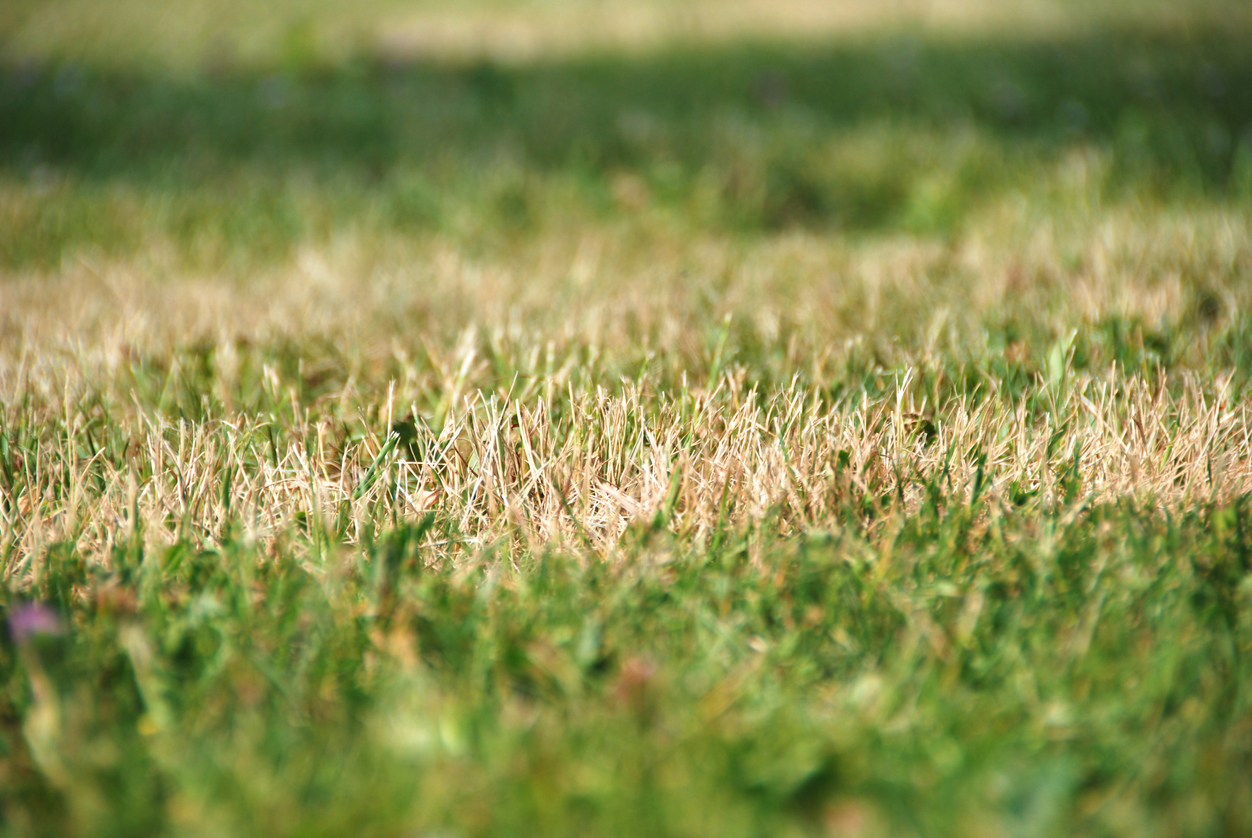
Fall is the best time to repair your lawn after experiencing a brutal hot summer.  Although your lawn may contain summer annual weeds like crabgrass, oxalis, spurge; take heart that their time will soon be coming to an end in September.  September beckons turf renovation in order to help restore some order by repairing any damage incurred since spring.  Common lawn damage results from drought, weed or insect infestation, or even disease and must be repaired in the fall for best results.

Regardless of what went wrong, having a game plan now is critical toward taking advantage of warm autumn soil, cool nights, and typical rain.  This normal weather combination makes fall an ideal time to repair and improve lawns in NH and VT.  So what can be done?  What should you consider in terms of products or services this fall to help your home lawn?

Aeration and overseeding should be at the top of your list because both will help your lawn in numerous ways.  Review my prior blog posts for the benefits of aeration and overseeding.  So long as soil moisture is good, aeration can begin in mid to late August depending upon your location.  Topdressing bare spots or a damaged area of lawn is another great process toward thickening up your lawn once seeded.  Seeding and renovating your lawn by aerating is just the first step toward helping repair and improve it.

Applying a high calcium lime, a well blended natural fertilizer, and even kelp or compost tea will enhance seeding results and benefit the organisms in the soil itself.  Sandy soils, new lawns, and those with thin topsoil depths are at a disadvantage in terms of supporting a high quality lawn without substantial work.  A great start to either improving or repairing a treated lawn includes some if not all of the aforementioned lawn treatments in both NH & VT.

September and October are huge months and can turn an otherwise weak, thin, or damaged lawn around; preparing it for the spring of 2012.  The healthier you get your lawn during this time frame, the better your grass is prepared for the winter and spring treatments next year.  Remember, most crabgrass control products do not allow seeding and use of that product simultaneously next spring.  Although spring lawn seeding and repair can be fruitful, the weather often plays a huge roll regarding rainfall and heat.  You will also face annual weeds as they germinate in new soil, presenting serious competition to your young lawn.  These two factors make fall the opportune time to make repairs over spring time when it comes to achieving maximum results.

Plan ahead now and don’t miss this important time frame to help repair your lawn for not only this winter, but more importantly the spring of 2012!

After a brutal summer, core aeration should be on your fall “to do list”.

2 commercial grade aerators at a job site


Core aeration or aeration is a physical process that utilizes a heavy machine called an aerator.  Similar to a garden rototiller, the aeration machine has a central shaft with 4 or 5 discs where the actual aeration tines are attached.  There are several types of aerators: some utilize solid tines while others are hollow, allowing the machine to extract plugs as it drives over your lawn.  These tines are designed to penetrate your lawn like using a cutter for cookies.  Most aeration cores will vary between ½” and 1” in diameter and will be left on the surface of your lawn.  The depth of a good core aeration job should vary between two and three inches.  Core length is dependent on soil moisture, the weight of the machine and its ability to push down versus roll over compacted soil, as well as the age or length of the tines.  Older tines become worn and must be replaced as they do not have the capacity to penetrate the soil with a blunt or worn tip.  If you are considering a rental aerator, be sure to check the tips of the tines – the more pointed they are, the better.  A blunt tine or one with a worn down tips will simply not pull a decent plug, although you may enjoy the exercise!

Aeration cores & holes

An aeration machine’s effectiveness is also dependent upon the weight of the unit and the speed at which is it used over the lawn.  The faster the aeration job, the less likely the machine’s weight can push down, forcing the tines into the soil.  In addition, most rentals are smaller, older units, enabling the average home owner to utilize the machine on a given weekend.  Although these rental units may do an adequate job in terms of maneuvering given their shorter width, a commercial grade aerator weighs hundreds of pounds more and is strapped with not only weights, but also with a drum full of water.  Basic physics dictates that using the right tool for the job, in this case a commercial aerator, will provide superior results.

 Aeration can be done any time of the year, but typically it is done in the spring or fall when soil moisture is greatest to ensure good plugs.  In addition, fall is the best time of year to over seed a lawn due to warm temperatures and more importantly, the absence of annual weeds like crabgrass that often interferes and reduces results.  Overseeding introduces superior grass varieties after an aeration job.  The seed germinates primarily in the aeration holes just like doing a hair transplant.  Overseeding is not meant to fill in damaged lawns with large patches or bare areas: this would be more in line with topdressing and seeding that could be done in conjunction with an aeration job.  Topdressing adds soil or compost in a thin layer allowing germination to take place in bare sections.  Overseeding adds new grass to an existing lawn area and small bare spots, and helps thicken up an existing lawn or thin areas.  Aeration and overseeding is not meant to establish a lawn or repair significant damage without the use of topdressing or lawn restoration.  Aeration is a great process and should be done annually to help maintain good soil health while minimizing compaction.

What are the benefits of Aeration?

-      Increased moisture penetration since the holes open up space for rain to reach the root system below.  The surface of the soil is hardened from high heat and summer drought, and a lack of rain makes the surface of the lawn much harder to loosen up due to the baking action of summer heat. 

-      Increased oxygen exchange (important for healthy roots) especially in compacted and dry soils.  Punching holes in the lawn will physically allow air to reach into the surrounding root systems, even as the hole begins to break down and fill back in with soil next spring.

-      Reduces soil compaction (especially soils high in clay) caused by those summer parties or high use.  Compacted soil does not promote healthy roots in grass or trees for that matter.

-      Increases penetration of fertilizers and other lawn products due to the holes being made.  The pellets or flakes simply roll into the plug and dissolve for faster results.

-      Increases rate of thatch decomposition due to micro-organisms being brought up to the surface in the plug itself.  There is no need to rake aeration plugs off a home lawn as they breakdown on their own in a short period of time.

-      Increases root development due to the vacant space created by the aerator tine.  The turf roots can expand outward and beyond in search of water, air, and nutrients in the soil.

If you don’t have aeration scheduled this year, give us a call and we can give you a proposal on aeration, as well as overseeding.  If topdressing is necessary, we can also give you recommendations on this procedure.  Aeration typically begins in mid to late August and runs right into October.  If you are interested or have questions on this important process, be sure to give us a call or e-mail anytime.  It will be back to school time before you know it!  Be sure to watch our aeration video posted on Flickr located on the home page of this blog.

Fall lawn seeding in NH & VT

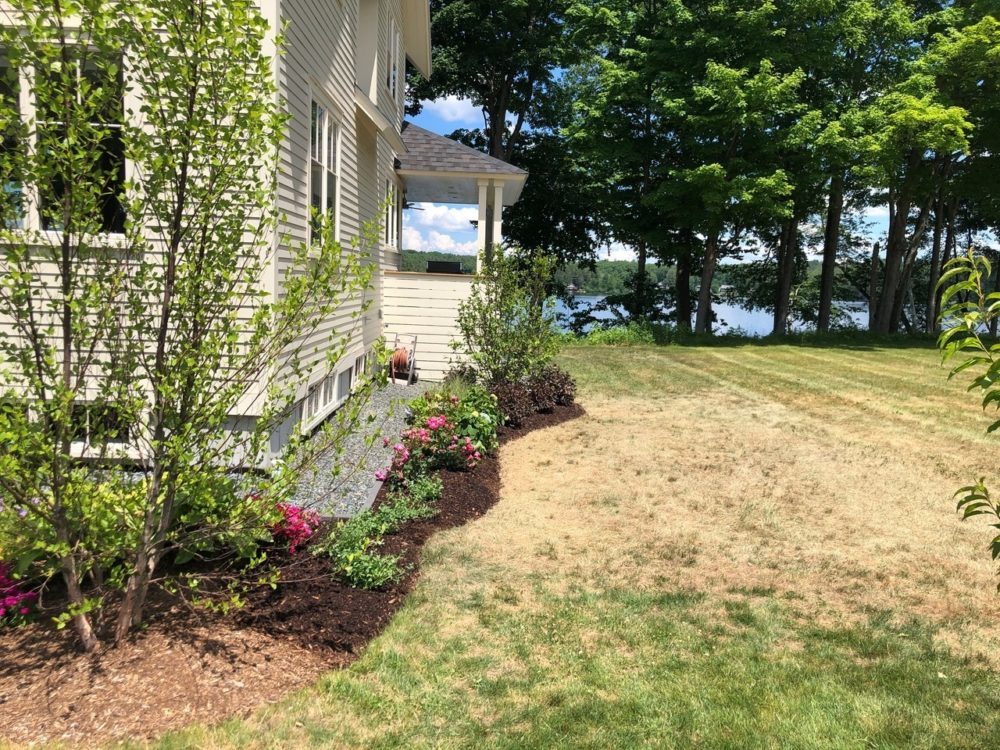
Fall is a superior time to establish an entirely new lawn or to simply fix a dead patch.  Both projects involve preparation of the site and subsequent seeding with an appropriate grass type best suited for the location.  The lawn pictured in this blog post was completed by our company less than a month ago and shows excellent progress within a short period of time.  This is due to warm soil, cooler days, excellent topsoil mixed with compost, high calcium lime for improved seed germination/pH adjustment, and lots of grass seed.  Like making a fine chili, the ingredients may seem simple- yet putting them all together in the proper sequence is paramount to success.  Whether you are undertaking a few square feet to 6,000 sqft as pictured in this lawn renovation- execution is as vital as the quality ingredients to achieve a new lawn area.

If you are going to do the lawn repair/installation yourself be sure to order quality loam mixed with compost if available.  Make sure you have enough time and a small tractor to move the loam if you are receiving a truck load or more.  Two experienced people can install a large lawn area in a weekend if the project has been thought out ahead of time.  Having the proper seed variety is not as easy as it may seem or the quantity.  Most grass varieties will call for 8 to 14lbs per 1,000sqft depending upon the type.  Rye and Tall Fescue have much larger seeds then Bluegrass or some shade varieties so more or less will be needed as a result.  The best lawns take thought and using a house brand or a generic “sun” or “shade” mix is often not the answer or solution for achieving a long term turf area.

Applying a slow release fertilizer with high calcium lime are additional tools to help the seed establish itself and put down a root system- all critical phases in the first 2 to 3 weeks.  Using hay adds weed seeds so stick to straw or nothing at all.  If a lawn is properly rolled to insure good seed to soil contact- you will get germination in the presence of adequate moisture.  Straw helps on slopes or areas that may not receive adequate water.  Seed nets or mats are very useful on steep slopes where you want to establish anything to help stop erosion.

The soil will stay warm into early November, especially around houses and southern or western exposures.  Since grass must undergo a physical change over winter- any grass established now will have a head start next year in terms of survival.  While larger projects may be put on hold until spring in terms of renovation- gambling with smaller areas are often worth the roll of the dice to get grass setup for the following year.  Location is key when it comes to making the call whether to embark on spot seeding or not in the fall.  If in doubt, seek the advice of a professional for options.  Fall seeding in NH & VT are great times to repair damage caused by summer heat and drought.

October Lawn Care in NH & VT

Published by mrgrass2 on October 4th, 2010 - in Fertilizer, Lawn Care Companies, Misc.

What is potassium?  Why put it on your lawn?  These are very good questions.  Potassium is a mineral which helps grass, second only to nitrogen in quantity and importance.  Most people know of N-P-K, well the last letter stands for Potassium.  Potassium has a special role in stress tolerance, heat tolerance, disease resistance, and root development.  Most soils in NH and VT are low in potassium, in part because it is so soluble and does not hang around very long.  Applying a rich potassium application in the fall will allow the turf to store up the energy necessary to become hardy for winter.  Although most balanced fertilizers will contain potassium during the year, that level is only a fraction of what is put down in the fall in a full-scale, 100% potassium application.  A great time to apply this product is September and October.  Do yourself a favor, give your lawn a banana before winter so it can prosper not only next spring, but survive the winter cold.

Excessive grub activity is going undetected in NH lawns

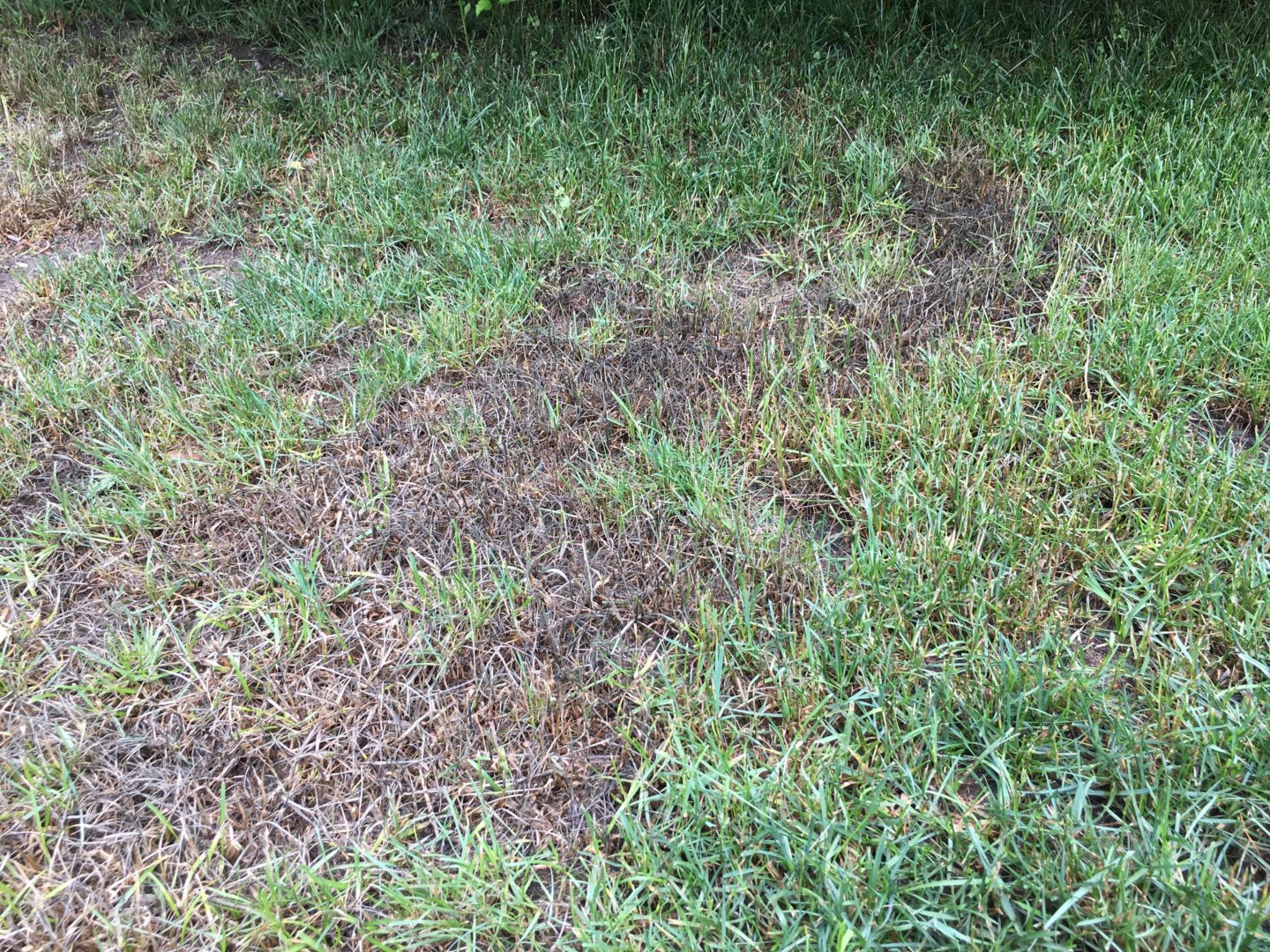
If your lawn is brown, don’t assume it is merely drought damage or continued drought given the dry weather pattern in NH.  Many lawns are being eaten right now by white grubs of all kinds.  White grubs are in bountiful numbers given the past dry, hot weather in NH & VT.  Unfortunately, many homeowners and commercial locations are not aware of this damage which will continue well into early November.  Many landscapers do not have the education or proper state certification and licensing to diagnose and treat complex lawn problems.  Left unchecked, grub damage can destroy sections if not entire lawn areas within weeks to months if left untreated.  The news gets worse!  These grubs will hide and wait until next spring, then the feeding will start again!  Many brown turf areas can be infested with grubs because many will assume the area was caused by drought and high heat.  While this may be true for some, other lawns will continue the downward spiral without appropriate action this fall or at best next spring.

Look for animals digging like crows, ravens, or skunks at night.  The turf will be easily uprooted since the root system is being attacked and cannot grow fast enough to anchor the grass to the surface.  Focus on sunny areas, along driveways or walkways.  Hot, or sunny areas are prime locations for beetles to lay their eggs for the next generation.  Your grass may be brown mixed in with green but when exposed, the trained eye can find grubs of varying sizes and types.  There are many products which can be used to control grubs including chemicals and nematodes.  Each claims success under various conditions and instructions to the home owner.  Don’t assume that picking up a bag at Lowes or the Home Depot will insure results.  Unfortunately, there are many products aimed at specific periods in the life cycle of grubs so a bag of ”Grub X or Milky Spore” applied in the fall does not mean it will work.  You must read the label or call a professional to determine if your $30 investment will actually work or just make you feel good.  If in doubt ask- don’t simply apply materials to your lawn without understanding the ramifications, that would not be environmentally responsible.  While grass is important, what you do to the environment is more important.  This is why professionals like myself must train, take written plus verbal exams by state agencies, and work in the field to gain “real world” experience.

Don’t let brown areas go unchecked, go call or e-mail a reputable lawn care company like mine.  Speak with a local professional with appropriate licensing and experience to give you the real answer.  Your lawn need not be damaged with proper information to back up appropriate action!

Prepare for fall lawn projects

September is almost here! What plans to you have for your grass this fall? If you are like most people, you know something should be done, but just don’t know what is important. Like most lawns, summer can be a tragic event with high heat, summer weeds, crabgrass, and browning- a distasteful combination for sure! Don’t lose hope, things can be done to turn your lawn around before winter. Fall is an ideal time to consider several applications that will give you the most for your green dollar.

Start simple. Don’t tackle a lawn project without starting out simple. An easy fall lawn treatment would be lime. Lime has a multitude of benefits and helps fertilizer function better. Like a great hair conditioner lime raises soil pH thereby making most fertilizer nutrients more available to the turf roots. Since it is difficult to apply too much lime, this is a simple, hard to mess up application for the most part. Try to use high calcium limes or at the very least, pelletized dolomitic limestone. Stay away from crushed limestone as it makes a mess and takes a very long time to actually work – months upon months vs weeks for the others I mentioned. So if you do anything this fall, put a good- heavy application of lime down to sweeten your soil.

As your brown lawn comes out of dormancy it will be looking for nutrients to begin the recovery process. Like a multivitamin in waiting, your lawn will benefit tremendously from a balanced- slow release fertilizer. Don’t worry so much about the analysis (the numbers like 10-5-19 etc), but try to select a nice balanced product. There are more fertilizer combinations than ice cream flavors so don’t be intimidated.

Aeration and overseeding are big fall treatments that can make substantial gains in a healthy lawn or one that has taken a hit due to drought and or thinning from disease or insect damage. Aeration will help with compaction, air, water, and nutrient availability plus it makes holes for overseeding.  Overseeding will not establish a lawn but it will add superior turf to an existing lawn or a thin one. Topdressing and seeding can be used at the same time for bare patches or if small sections of the lawn have perished. Don’t be too quick in pronouncing grass dead- just because things are brown does not indicate dead turf. Most turf will brown out as a normal protective measure due to heat and or lack of moisture. Lots of grass can break this dormant period after cooler weather and some significant rain- this process just takes time- patience is key.
On the other hand, extended drought- short mowing- and or insect damage may result in turf thinning to all out destruction in a variety of sizes. If you are in doubt- have a professional check and give you the diagnosis before starting over from scratch something that can be come very time-consuming and expensive.

Broadleaf weed control can be used once weeds begin to grow. Annual weeds like crabgrass and spurge will die out on its own. Remember, most broadleaf weed control products will stress out turf- so only use this material as needed and at the right time. In addition, if you use broadleaf weed control- seeding and or overseeding can be delayed or postponed many weeks due to incompatibility issues. As a home owner, you must decide whether to aerate and overseed first and wait on weed control, or do you go after the weeds first and then aerate and overseed later in the fall. This is a fine dance and timing is important due to the onset of cooler weather and approaching frost/snow in November. If in doubt, ask someone in this kind of business first for advice. Once the material is down, you cannot take it back up and the delay may very well mean a missed opportunity.

A winterizer or a late season fertilizer treatment is a great application to help your grass store up energy for next spring. A late season potassium treatment is different from a winterizer being a balanced product. Potassium normally comes in a 0-0-62 blend, not a balanced product as compared to a winterizer that would be a 25-8-15 for example. The key to a late season application is so you don’t push a lot of new growth this year, but allow the lawn to store up the energy for next spring as a reserve. Potassium helps thicken cell walls and makes your lawn more resistant to drought, disease, and winter damage. Both applications are most useful when applied properly.

I hope this small post has inspired you to plan your attack this fall, after all, it is still early and lots can be done! Don’t let the fall slip away into winter, do some research- ask some questions, and get that grass looking better for 2011!

© Copyright 2009-2012 Chippers, Inc. All Rights Reserved.