Posts Tagged ‘cleanup’

Spring Lawn Checklist 2011

Goodbye winter, hello green!

The snow is mostly gone, you may even have a few lingering snow banks that refuse to leave, but for the most part, your lawn is begging for some attention.  Here is a handy spring checklist for your home lawn as you prepare for spring.

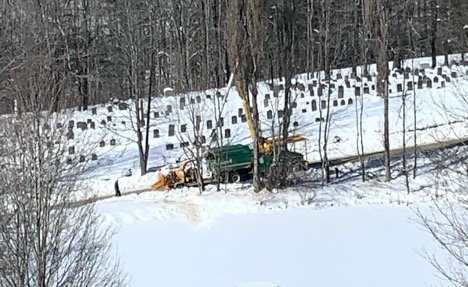
1. Plow damage.  It’s been a snowy, rough winter and if you had your driveway plowed, you are likely going to have plow damage.  Chunks of sod and lawn likely got plowed up along the edges and pushed further back onto your lawn.  These pieces of turf chunks may be close to their original location which is now just a scar in the dirt.  If possible, try to put the lawn puzzle back together and place the grass pieces back onto bare soil.  It may well be weeks before anything else can be done and during that time frame, those pieces of grass will start to break dormancy and grow.  Having them at least touching soil is better than mulching your unharmed lawn where they currently reside.  You can always move these grassy sections later and seed as needed into surrounding bare areas.

2. Debris. You may well find gravel, junks of asphalt, branches, leaves, and other debris that simply don’t belong on a grassy surface.  The sooner you can rake and remove this debris, the better.  If the debris is left in its current location, you may not see it during your first mow.  Nothing is more painful than hitting sticks, rocks, and gravel with your mower having been placed onto your lawn by a plow truck.  Leaves left in piles or allowed to matt, especially in shade, will simply mulch any existing grass depending upon its health and density.  The less debris the better.

3. Raking. There are two ways to rake a lawn, one is intentionally damaging- power raking/dethatching, the other is just plain hand raking or using a pull behind tractor implement.  I do not recommend power raking/dethatching unless the lawn has a severe, and by severe I mean a thatch problem- over 1” thick.  Most lawns do not have this kind of depth when it comes to thatch.  As a result, if the average lawn is power raked, it is actually damaged by the process of tearing and cutting.  Since the grass is dormant, and likely stressed by winter ice/snow/cold damage, power raking tears up roots and actually thins a lawn which in most cases is not a desired outcome.  If seeing piles of dead grass blades makes you feel warm inside, you might want to look at a coffee or hot cocoa instead, it certainly will do less damage to your lawn.  I have seen perfectly healthy lawns nearly destroyed by well intended landscapers, only to be called in to repair the damage by overseeding and other processes.  Stick with a hand rake and fluff the lawn up to help it warm and start to grow, or hire someone to do a spring cleanup which includes light raking.  If your lawn has a thatch issue, consider core aeration later in the spring or fall after it has recovered from winter damage.

4. Fertilizer/Crabgrass control. If you are going to use either fertilizer and crabgrass control blended together- don’t put it down too early.  A crabgrass barrier/inhibitor has a limited life span and can easily thin out turf already in a weakened state from winter.  Your best bet is to apply a plain balanced fertilizer to enhance recovery in April, than follow it up with a crabgrass inhibitor in May for maximum results.  This order will accomplish the best of both treatments while not subjecting your lawn to further stress, thinning, or damage.

Ten Reasons to improve your lawn in NH or VT

Published by mrgrass2 on January 25th, 2011 - in Lawn Care Companies, Misc.


The Environment #10 and #9

#10  A healthy lawn reduces water runoff and soil erosion which in turns protects our lakes and streams from sediment moving from the land into the water.  Turf is a living filter which protects ground water quality through a vast network of roots, thatch, and leaves.  There are many lawn products that can be used close to or up to the water without harming that ecosystem such as lime, kelp, and further back slow release products.

#9  A healthy lawn will absorb 6 times as much rainfall as a common hay-field.  A healthy lawn entraps pollutants and with the help of soil microbes, biodegrades them safely.  Coating grass seed with mycorrhizae improves turf defensive capabilities against insects and disease issues often reducing the need for fertilizer in a calendar year.  Compost tea is a perfect example of how to improve the soil and help your lawn simultaneously.


Functional Benefits #8 thru #4

#8  A healthy lawn dissipates heat and reduces the energy required to cool homes and buildings- thus saving energy.

#7  Turf grass abates noise and reduces glare.

#6  A mown lawn decreases disease carrying ticks and reduces fire hazards near wooded areas.

#5  Well maintained turf grass reduces injury from sports played at home, school, or elsewhere.

#4  A well cared for lawn is actually a low-cost asset that can be physically used or enjoyed for pure viewing pleasure.

Health  #3 thru #1

#3  Studies show the cycle of growing grass and the color green lift human spirits and provide both thoughts and feelings of happiness, privacy, and serenity.

#2  Well maintained turf is known to have therapeutic effects on humans as measured by heart rate and blood pressure- increasing recovery rate of hospital patients.

#1  Hiring a licensed, experienced turf professional will help you accomplish some if not all of the benefits above while insuring the job is done correctly.  Free up valuable time and spend it with your family or friends!

As you can gather, grass is simply more than just a lawn!  Winter is the perfect time to explore the advantages of utilizing the skills of your local turf care provider.  Perhaps this is the year to explore natural or organic products?  Stop guessing and wondering if you are putting down too much or too little material while wasting your valuable Saturday or Sunday.  Send that e-mail or make that phone call today and get your lawn on the right path in 2011.

Last minute fall lawn projects

A wonderful Turkey on a nice lawn!


Its quarter to Thanksgiving and you are fully engulfed in travel preparations, shopping, and cooking plans.  As the air cools there is little time to make sure your lawn is ready for winter.  Was the last mowing 2 months ago or in October?  Some projects can wait while others should be done before the snow flies!  Here is a quick five step list that is given in order of importance, with 1 being the most important!

5.  Change the oil on your mower, clean the air filter, inspect the spark plug, and lubricate the blade and undercarriage in preparation for an easy first mowing.

4.  Take the time to review your 2011 lawn health care proposal or contract during the winter so come spring time, your turf will receive the care it needs at the appropriate time.  Like reviewing seed catalogs for your garden, lots of planning can be done concerning your lawn during the winter in preparation for a busy spring.

3.  Mark or have your driveway marked with colored stakes along the edge of the lawn so the plow guy minimizes shredding the edges.  Grass growing along a driveway is prime crabgrass growing area, especially if you need to seed in the spring or replace torn up turf chunks.  Nothing says sadness than viewing former pieces of healthy sod upside down with a light gravel coating in April!

2.  Rake and or remove any debris piles.  Piles of leaves, wood, tarps, branches, gravel- anything that stops an air exchange steps up winter kill and dead patches come spring time.

1.  Mow the lawn shorter than usual. 1.5 to 2” is great.  A shorter cut helps prevent leaves from accumulating in piles as the wind moves them across your nicely trimmed, semi- dormant turf.  A shorter cut helps with snow mold and ice damage and provides a faster green up in the spring allowing the sun to warm the soil quicker.

Wishing each of you a safe and relaxing Thanksgiving holiday!

A dirty lawn!

Published by mrgrass2 on November 3rd, 2010 - in Cultural Practices, Misc., Turf Disease

Cut short & remove the leaves before winter!


A dirty lawn covered with leaves and left uncut entering the winter is at great peril for winter damage.  Besides blocking sunlight in the late fall before snowfall, leaves restrict normal air circulation and the ability of the lawn to dry out.  Even small piles of leaves can mulch or weaken your grass in mere weeks if left uncollected.  Those same piles or heavy leaf cover will freeze and inhibit air circulation under the snow- a recipe for disaster.  A clean lawn is a happy lawn!

Now is not the time to retire your mower in early November, especially if the grass is still over 3 inches in height.  Your lawn has the potential to still grow another inch or more before snowfall and that added length predisposes your turf to snow mold!  Matted, wet turf is an ideal habitat for mice, snow mold, and ice damage.  Do yourself a simple favor this weekend or afternoon, cut your lawn down to 1.5” and help give your grass an edge going into winter.  No one likes a dirty lawn!  Clean up your lawn today and sleep well tonight!

Review your lawn contract before renewing

If it seems to good to be true- you may be right

Did your doctor ever tell you to get a second opinion?  Hundreds of commercial lawn care contracts will be mailed out shortly to residential homes in remote parts of NH and VT.  Even more lawn contracts will be mailed out to commercial customers in the hopes that those in the appropriate position will sign, mail, or simply fax it back with no questions asked.  I propose that each contract deserves not only a second opinion, but a thorough examination line by line item.  The national and larger regional lawn care companies typically roll your program over from year to year.

Most lawns are not being examined to determine true needs but rather recycled in archives from prior years like a CD player on repeat.  While this automated process may approach adequate at best, I sincerely doubt you are receiving a turf care program worthy of your hard-earned dollars.  Furthermore, I doubt most existing clients even understand what they are receiving and why versus what is available in their market area.  Let me expand on this theme.

Many remote lawn accounts are labeled and classified as ”commercial”, with most customers unaware of this practice.  These kinds of accounts are processed at a high volume utilizing heavy machines called Turf-Trackers or even tractors.  These machines do a decent job on large properties or fields but are anything but light and are not ideally suited to home lawns or smaller settings.  An inexperienced operator can easily cause damage while running the machine over frost covered lawns, shaded locations, and especially slopes.  Turf can be easily torn, compacted, and ripped up without careful attention from the driver.  These machines make it easy to operate at an aggressive speed as they work to achieve the goals set for them by the larger corporate office.  If these facts don’t cause you to raise an eyebrow, please read on.

Unfortunately, many of these “commercial” contracts are recycled revenue without any fresh investigation data to support the renewal.  In fact, I would wager that most if not the majority of these accounts are seldom looked at beyond the production dollars they represent each year.  Simply put, the large national chains are usually too far away and their attempts to service remote regions often severely stress their limited staff and outsourced customer service centers.  Most national lawn care companies utilize lawn programs like McDonald’s “Happy meals” except without the toy because you get a few fertilizer visits, grub control, and a lime treatment.  Who would question that?

Does your phone call get forwarded to a call center or does a real person answer your call?  Are you able to reach your lawn care office or do you even know where it is?  Are you supporting your local economy or something much larger?

How can these large lawn care services claim and advertise to be local when they drive nearly 2 hrs to service lawns in remote areas of NH beyond their primary service market?  Is that local service?  Again, any company that pre-mixes fertilizer in a liquid medium and then applies it to every lawn in a single day is doing their clients a basic injustice as outlined in my blog post (http://mrgrassblog.net/2010/04/22/price-and-the-…awn-treatments/ ‎).  Mixing concentrated fertilizer into a liquid is an easy and inexpensive way to administer a lawn program.  As I said before, yes it works well for some lawns but not all lawns.  You get exactly what you pay for with this type of treatment, a quick buzz of green.  There are lots of natural and organic alternatives to this kind of turf care.

Before you sign on the dotted line, before you pre-pay for your entire year upfront- get a second opinion from a local lawn care company.  I welcome the questions and the challenge to take your property to the next level.  If you are not in our service area, I have companies I can recommend to you- just leave a comment to this post.  Even if you decide not to make a change, doesn’t it just make sense to get another opinion like a car or house repair?  Don’t just sign without thinking about what things could be like in 2011.  I know it’s easy to just send the lawn contract back, but a free second opinion from any other turf health care company is time well spent.  Make this winter the time where you decide to explore what has been going down on your lawn in the past and why!  Support your local economy and research who services your town for lawn treatments.  Exploring new options can be educational, fun, and you might even receive better results!

Lawn Pesticides and the rainbow of emotions

I normally don’t write on the topic of lawn pesticides because it is so vast, involves emotions, has supporting scientific data on both sides, and has so many people who claim to be ”experts”.  There are some who would request additional laws through legislation given their own unique perspective on an industry I have worked in for over 24 years.  Unfortunately, these very factors create confusion because most people are not aware of existing oversight from state agencies concerning laws already functioning within the scope of lawn treatments and specifically pesticides.  On a happier note, there are already stacks of laws restricting, monitoring, and enforcing the use of pesticides in a lawn setting within the state of New Hampshire and Vermont.  Both states have divisions within their respective departments of Agriculture.  In either state, you must pass a written exam which is very comprehensive in material and substance in respect to the license you desire to obtain.  For instance, if you want a turf license, you must take a turf category exam which tests life cycles and specific pests relative to turf or lawns.  In addition to this, you must also take what is commonly known as the “core” which consists of basic terms and laws relative to using pesticides in each respective state.  Items such as reading the label and rates are covered as well as important safety protocol among lots of other subject matter.  If you wish to get another license, say for treating ornamental shrubs, you must take another exam- but you do not have to repeat the “core”.

In both states, your license expires after 5 years so you must either keep up on annual certification credits or retake the entire set of exams.  Each license requires its own set of credits so this often involves a lot of training during the winter months to accrue enough points to renew every 5 years.  In either state, you must have a minimum grade in order successfully pass, become certified, and have a license issued in your particular category.  In New Hampshire, at least one person within a given company must also obtain a higher class license (Supervisory) like a manager who oversees his or her employees who have an operator class license.  The Supervisory level person must then take the exam again, receive a higher score, and pass an oral examination to receive this “Supervisory Level” class license.  As you might imagine, this is most delightful and lots of fun . . . NOT.  As you might have already surmised, all of this licensing and continuing education helps to keep the industry informed on the lates products or issues at hand, monitors product being applied per state and acre by filed reports, and provides a great deal of accountability.  

There are different classes of licenses ranging from commercial, to commercial not for hire, to private.  These classes cover home farms, to golf courses, to commercial lawn companies who treat businesses and residential home lawns.  Each has overlapping general rules in NH but each has specific regulations that must be adhered to as part of best practices when dealing with pesticides.  As you may have concluded by now, there is already a lot of regulation regarding pesticide use in NH and VT.  Bad decisions cannot be prevented by adding legislation already on the books designed to watch and monitor any business involved with pesticides.  However, nothing substitutes or compliments intelligence quite like common sense.  Making good daily decisions on what products to use, where to apply them, appropriate rates, and when not to treat for issues are all very important to a high quality, reputable business.  Simply put, it’s the right thing to do.

Real trouble arises with a lack of experience and businesses who do not become licensed yet illegally apply pesticides.  Real trouble continues when a home owner can purchase similar or the same products at a Home Depot/hardware store and then treats for the wrong problem, at the wrong rate, at the wrong time of year because they did not know the pest life cycle.  I can assure you, there are millions more “Do it yourself” folks out there treating their own lawns or pest problems than all of the commercial lawn companies combined in either state- or the USA for that matter!  The pure volume of these numbers speak for themselves.  Who do you think is more likely to inadvertently make a mistake, the employee equipped with a state license with training or ”Mike” on the weekend?

As for pesticides, I have read that the sole intention of a pesticide is to kill- and by definition this would be correct.  However, vinegar used at a higher concentration is used as an organic herbicide and can burn your cornea or cause serious injury.  It’s still vinegar but it can be used as a herbicide too.  Very interesting.  I believe in using the right tool for the right job.  Should everyone be “saucing” up their lawns just for aesthetics?  Maybe not.  This question is all in the eye of the consumer.  We do live in the United States where choices can be made?  We all have the right to make choices, all within reason- within the laws established by our government.  Perhaps there are alternatives.  There are materials and pesticides that exist which are in fact more environmentally safe than just 5 years ago.  Like colors on the rainbow, the industry of lawn care continues to change in favor of less pesticide use and more education.  This statement means there may be a time and reason for using a particular product, but only after ruling out alternative measures.

For instance, does every lawn have to be weed free?  Most likely not.  You can reduce pesky weeds in your lawn by keeping it properly cut and healthy.  You can reduce nuisance weeds by aerating and overseeding, by doing many little things correctly.  Who is willing to step up to the plate?  What is wrong with treating for weeds maybe once or twice a year to knock back the population complimented by a turf health care program?  What is wrong with living with weeds?  To each his own may best sum this up, with a dash of compromise.

The issue of pesticide use will always be a hot topic, and it should be for many reasons.  However, additional government regulation and control may not be the best and first answer over education and common sense.  Information is power and those who rely on emotions and not real information are at a disadvantage.  This is my humble opinion for today’s post.  I hope you learned something new today, use it!

Autumn leaf removal, simple yet important

As the air cools and summer fades into piles of colored leaves, your lawn beckons attention before the snow covers it with a blanket of white.  Some lawn projects can be simple like raking on a regular basis or mowing with a vacuum bag style tractor system.  Raking, or specifically a lack of leaves allows your lawn to capture more sunlight as the deciduous trees lose their green canopy.  Increased sunlight can really help shaded and weak areas capture additional energy to help prepare for the winter.  In some cases, this vital time period could be a month or more of growing before slowing to the point of near dormancy with the onset of freezing weather.  Any leaves left on the lawn can cause a mulching action by inhibiting sunlight from reaching the leaf blades below.  Don’t allow piles of leaves to sit for weeks on end, or the grass underneath will suffer the consequences possibly even leading to damage.  Keeping your lawn clean in the fall can really improve the chances of winter survival and minimize damage.  Turf that is left covered with leaves or lots of pine needles face a lack of air, light, and often succumb to ice damage in a weakened state.  As simple as raking or leaf removal is, it is very important to all lawns to approach winter clear as opposed to buried out of sight under leaf litter.

Autumn is also a great time harden your lawn off for winter.  A wonderful mowing height during the growing season is 3″ as a standard.  Your mowing height can be lowered as October fades into November.  Drop your mowing deck a half-inch a week starting in late October with the final cut in mid November being around 1 to 1.5 inches in height.  The slow drop in mowing height helps harden your lawn off and slows growth in addition to falling temperatures.  Many folks put their mowers away much too early in October when the lawn continues to grow well into November in many years sometimes to the Thanksgiving holiday break in southern areas of NH or VT.  Some of the most simple cultural things like mowing and raking can make or break some turf grass areas between not only looking great, but awesome.  The preventative care in raking and mowing can yield big dividends over a harsh winter- aiding in survival and spring recovery.  Turf that goes into the winter long and by that I mean a normal height of 3″ or more- will be predisposed to snow mold and ice damage, even more so with leaf or needle debris.

Plan ahead now and rest easy this winter knowing you did all you could to help your lawn make it into a new year!

Fall Seeding replaces crabgrass

A very common question I hear is, “When is the best time to seed your lawn?”.  My answer is usually the same due to a few basic factors.  Fall wins over spring for a few key reasons.  The first being the soil is already nice and warm- ideal for faster seed germination with sufficient moisture.  Spring soil is usually cold and even after weeks of warm weather- soil temperatures do not reach into the low 50′s until mid to late May.  Any colder and the seed tends to stay dormant and dry out.  Therefore, fall is perfect for seeding since the soil temperature is already much higher than this- allowing for faster germination periods which means a better lawn for you.

The second reason is the competition- crabgrass and annual weeds like spurge and oxalis are just germinating in the spring- growing and fighting for space, light, water, and nutrients.  Spring seeding and especially summer seeding can often spell disaster because crabgrass will grow so much faster than the seed you planted.  This is an unfair competition because soil laden with crabgrass seed will win every time- even more so in hot, dry weather.  In the fall, these plants are all dying!  Hurray!  Yes, the bad guys are dying and cannot harass your new grass.  Therefore, you have two very big reasons to seed in the fall over the spring because its your time and money.  Why not take advantage of the next 6 to 8 weeks and do a little lawn fixing?  It will be an entire year before you see can seize this opportunity again.

If you seed now, you can apply a crabgrass barrier next spring and help suppress all the bad guys I mentioned above.  If you wait to seed until spring, you will have to forego crabgrass control- unless you pay for a unique product that is VERY expensive which allows seeding and a crabgrass barrier to be applied at the same time.  For most folks, seeding in the fall and applying a solid barrier in the spring makes the most sense- don’t make the fight uphill, go with the flow and take advantage of each season according to the life cycles and maximum benefit you can derive!  Get seeding today!

Prepare for fall lawn projects

September is almost here! What plans to you have for your grass this fall? If you are like most people, you know something should be done, but just don’t know what is important. Like most lawns, summer can be a tragic event with high heat, summer weeds, crabgrass, and browning- a distasteful combination for sure! Don’t lose hope, things can be done to turn your lawn around before winter. Fall is an ideal time to consider several applications that will give you the most for your green dollar.

Start simple. Don’t tackle a lawn project without starting out simple. An easy fall lawn treatment would be lime. Lime has a multitude of benefits and helps fertilizer function better. Like a great hair conditioner lime raises soil pH thereby making most fertilizer nutrients more available to the turf roots. Since it is difficult to apply too much lime, this is a simple, hard to mess up application for the most part. Try to use high calcium limes or at the very least, pelletized dolomitic limestone. Stay away from crushed limestone as it makes a mess and takes a very long time to actually work – months upon months vs weeks for the others I mentioned. So if you do anything this fall, put a good- heavy application of lime down to sweeten your soil.

As your brown lawn comes out of dormancy it will be looking for nutrients to begin the recovery process. Like a multivitamin in waiting, your lawn will benefit tremendously from a balanced- slow release fertilizer. Don’t worry so much about the analysis (the numbers like 10-5-19 etc), but try to select a nice balanced product. There are more fertilizer combinations than ice cream flavors so don’t be intimidated.

Aeration and overseeding are big fall treatments that can make substantial gains in a healthy lawn or one that has taken a hit due to drought and or thinning from disease or insect damage. Aeration will help with compaction, air, water, and nutrient availability plus it makes holes for overseeding.  Overseeding will not establish a lawn but it will add superior turf to an existing lawn or a thin one. Topdressing and seeding can be used at the same time for bare patches or if small sections of the lawn have perished. Don’t be too quick in pronouncing grass dead- just because things are brown does not indicate dead turf. Most turf will brown out as a normal protective measure due to heat and or lack of moisture. Lots of grass can break this dormant period after cooler weather and some significant rain- this process just takes time- patience is key.
On the other hand, extended drought- short mowing- and or insect damage may result in turf thinning to all out destruction in a variety of sizes. If you are in doubt- have a professional check and give you the diagnosis before starting over from scratch something that can be come very time-consuming and expensive.

Broadleaf weed control can be used once weeds begin to grow. Annual weeds like crabgrass and spurge will die out on its own. Remember, most broadleaf weed control products will stress out turf- so only use this material as needed and at the right time. In addition, if you use broadleaf weed control- seeding and or overseeding can be delayed or postponed many weeks due to incompatibility issues. As a home owner, you must decide whether to aerate and overseed first and wait on weed control, or do you go after the weeds first and then aerate and overseed later in the fall. This is a fine dance and timing is important due to the onset of cooler weather and approaching frost/snow in November. If in doubt, ask someone in this kind of business first for advice. Once the material is down, you cannot take it back up and the delay may very well mean a missed opportunity.

A winterizer or a late season fertilizer treatment is a great application to help your grass store up energy for next spring. A late season potassium treatment is different from a winterizer being a balanced product. Potassium normally comes in a 0-0-62 blend, not a balanced product as compared to a winterizer that would be a 25-8-15 for example. The key to a late season application is so you don’t push a lot of new growth this year, but allow the lawn to store up the energy for next spring as a reserve. Potassium helps thicken cell walls and makes your lawn more resistant to drought, disease, and winter damage. Both applications are most useful when applied properly.

I hope this small post has inspired you to plan your attack this fall, after all, it is still early and lots can be done! Don’t let the fall slip away into winter, do some research- ask some questions, and get that grass looking better for 2011!

A word on irrigation & watering your lawn

Watering your lawn

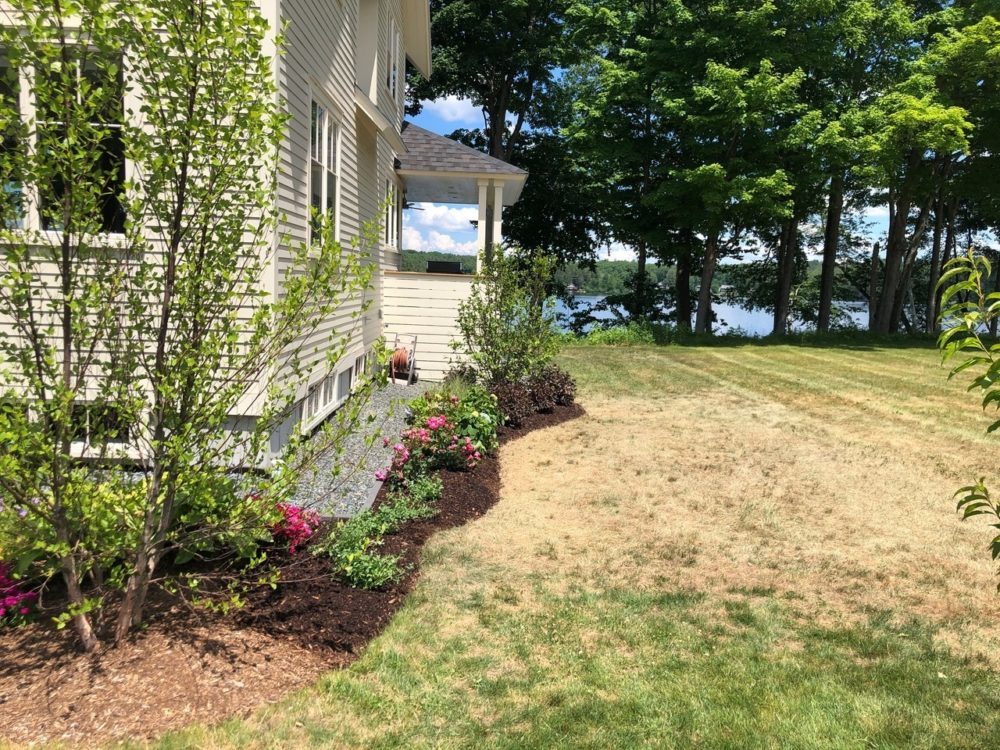
There are a few things you can do to help your existing lawn before you have to add water.  The first cultural practice worth noting is mowing to a height of 3-3.5″, especially in full sun.  Mow only if you need to and do so in the am or late pm, try to avoid 12pm to 3pm when the sun is the highest and the grass is the most stressed.  Mowing during this time frame, especially in high heat (85 or above)- combined with dry conditions or turf that is already stressed will most likely cause more browning and or leave mower tracks.  Imagine the stress placed on a lawn that is already just holding on with dry, sandy soil.  Imagine then the additional moisture loss out of each leaf blade as you mow, the result can be quick and dramatic, browning within hours or days at best.  Once your lawn has shut off, either in patches or entire areas- it will take days if not weeks of solid irrigation to “restart” the growing process.  As I have said before, browning is a survival mechanism when your turf shuts off from growing due to a lack of moisture in the soil.  If there is not enough moisture, turf growth will slow down and finally stop.  During this process, your lawn will turn a dull, purple blue- to possibly white spots on the leaf blade- and finally to a tan or complete brown. 

Providing irrigation at the earlier stages will produce faster results than the later brown, the time frame can be from a few hours or overnight with light stress (hazy or dull green/blue) to weeks with all on dormancy and browning.  So what is a good rule of thumb when it comes to irrigation?  That is a complicated question so I will stick with the average home- without an irrigation system.  If you want a green lawn during the summer- you will have to irrigate at some point or prepare to see browning to varying degrees as rainfall comes and goes.  There are a few types of irrigation goals, one is to keep the lawn aesthetically pleasing and green.  The second would be to keep your lawn alive during an extending dry period- such as 3 to 4 weeks with an inch or less total.  Most lawns will require 1″ of rain per week to grow properly without experiencing drought.  Remember, grass blades are mostly water so to expect your lawn to grow and or stay a vibrant green in high heat and or lack of rain is simply not realistic.  Preparing your grass with slow release fertilizers, high calcium lime, sea kelp, and aeration are powerful tools which keeps your grass healthy.  Healthy turf will respond faster to irrigation, recover better, and withstand dry conditions- especially if mown correctly (3-3.5″). 

Watering your lawn for aesthetics is best if you can proactively watch for dull patches- if you do see one, hit it with water for 1/2hr to 1hr for a day or two.  You should see recovery fairly quickly if your turf is in good shape.  Most lawns have “hot spots” or zones which tend to dry out faster than the majority of your lawn.  If you know where these areas are, you can simply watch them and be prepared to water them more often than the rest of the lawn.  In some cases, those may be the only sections you water, so have your hose and sprinkler ready.  Don’t waste your water, don’t irrigate for hours upon hours, after an hour or so- you have provided enough and soaked the upper root zone. 

A general rule on watering- some water is better than none.  As a rule, watering in the early am to late am is the best time.  Watering at high noon or the afternoon will not burn your lawn, but a lot of water will evaporate- a waste of resources for sure.  If you cannot water until the afternoon to early evening- you are likely to set up your lawn to summer diseases like brown patch or red thread.  As a rule, keeping your lawn dry going into the night is your best option.  Again, diseases like brown patch are enhanced by high heat, humidity levels, and excessive soluble nitrogen (liquid fertilizer).  A light touch is often required in late to mid July to August if the heat and humidity arrives. 

Irrigation is usually required if you want green grass in the summer

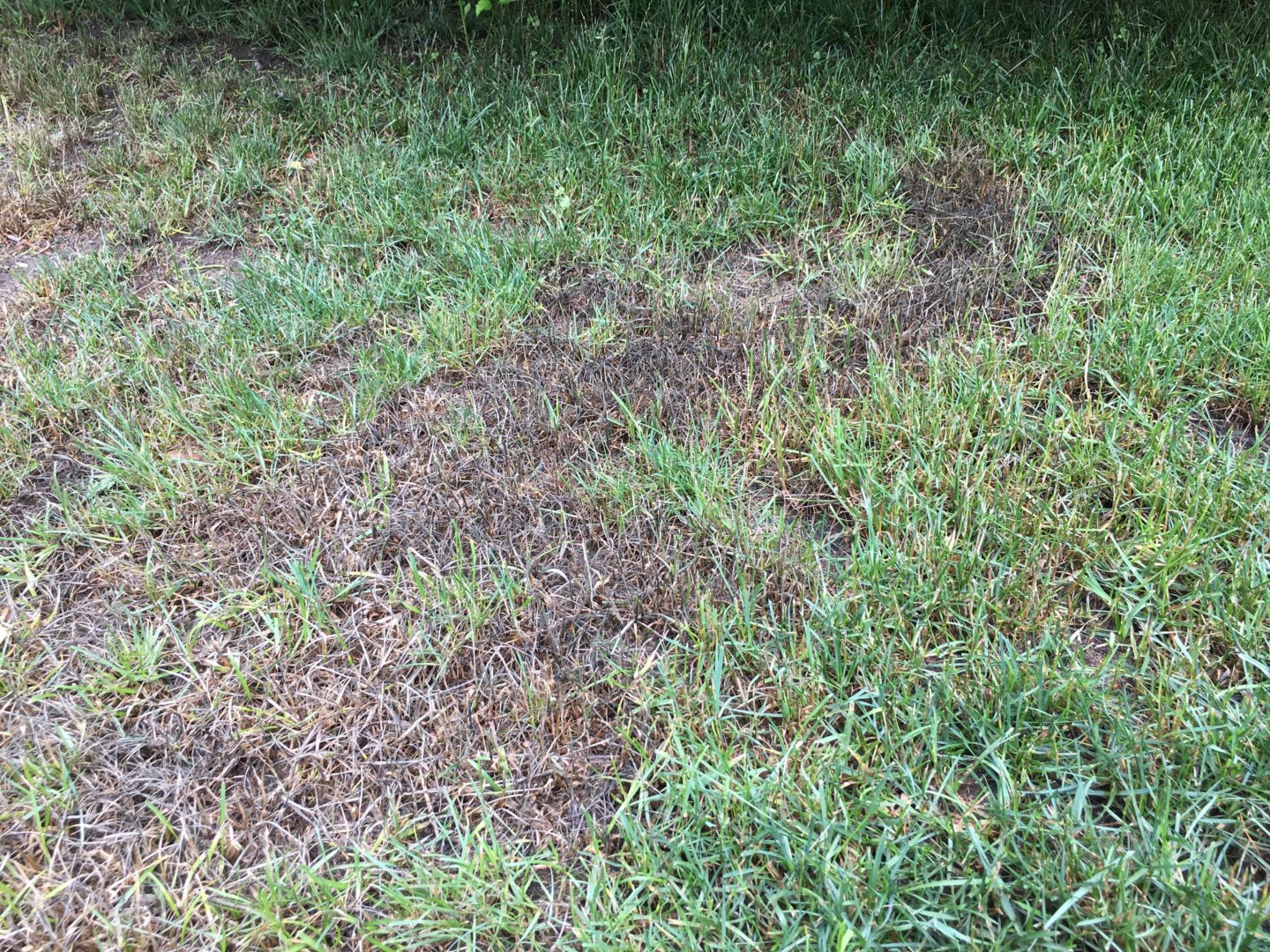
Survival irrigation are for those of you who have sections of lawn that “suddenly” turned brown.  You wake up one saturday morning and go outside to get your newspaper- you glance up and parts of your lawn are brown!  When did that happen?  Well, likely it has been going down hill for a week or more and you just noticed the color change.  This is certainly not magic!  What can you do?  Why bother?  Well, if your grass is toast, a nice light brown like I enjoy my coffee- any water will help- believe me.  At this stage, your grass is close to dormant or dormant.  Don’t mow it and add more stress.  Any water will help keep the crown- the heart and soul of your lawn alive.  While most growing lawns need 1″ per week of rainfall, even if you water once for an hour or so, each week- you can keep your grass in a dormant state but alive.  What you don’t want to do is water vigorously for one week each day and then just let it ride for the rest of the month.  This kind of irrigation is survival irrigation, minimizing death and future dead patches.  Speaking of dead patches- this is a dangerous time for your lawn because you will never see damage inflicted by chinch bugs, cutworms, sod webworms, or grubs.  September rolls around and you chalk up dead areas to lack of water when in fact you had and still may have insect activity. 

Irrigation does not have to make you a slave to your lawn if you know what you want to accomplish and how your lawn reacts to heat and dry weather.  Break out those hoses and check your sprinklers today!

© Copyright 2009-2012 Chippers, Inc. All Rights Reserved.