Archive for the ‘Cultural Practices’ Category

Autumn brings out the best in a lawn in NH & VT

chippers can create a picture perfect lawn outside your window

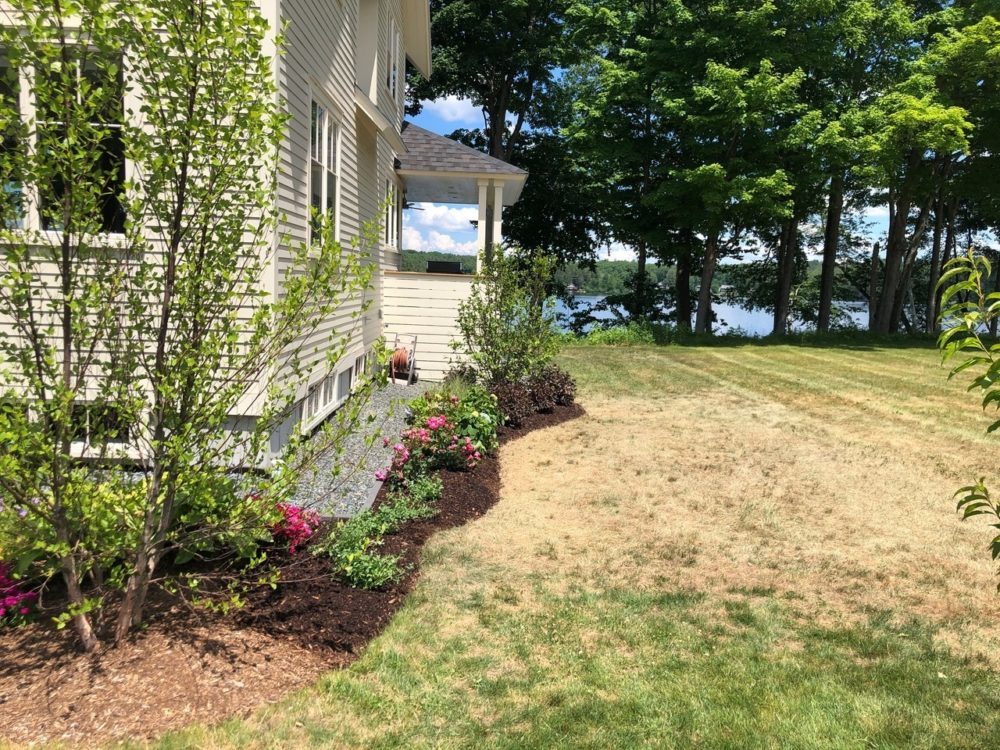
With autumn in full swing, most lawns in NH & VT should be well recovered from what was a record setting summer in terms of high heat.  Any lingering damage should be very obvious and can be fixed before winter such as dead patches of crabgrass or ongoing grub activity.  September and October are ideal months to improve your grass due to warm soil, ample moisture, and cool days/nights.  Fertilizing, liming, aeration, seeding, compost tea, and optional weed reduction are all most effective at this time of the year in NH & VT.  Any insect activity should be addressed now as the longer you wait; the more lawn you lose and the more difficult the control becomes as the pests grow larger such as with grubs in the soil.

If your lawn has issues with weeds such as shepherd’s purse, chickweed, or henbit; consider a treatment this fall with products such as Dimension.  Use of the aforementioned product this fall will also provide some crabgrass suppression next spring.

Autumn is a great time to improve your soil since it is the supporting mechanism for a healthy lawn.  Topdressing with compost, adding sea kelp, or spraying on compost tea rich in humates, fungi, and bacteria are encouraging ways to improve the microbial state of your lawn before winter.  Using a high calcium lime is a positive step to not only adjust your soil pH, but provide calcium which turf greatly appreciates by improving the cation exchange within the soil itself.  What does that mean?  Calcium helps loosen soil up while Magnesium based lime tends to bind it up more.  The better the cation exchange, the less your soil will leach nutrients, especially when combined with a healthy microbial environment below ground.  Soils high in organic matter have high cation exchange capacities while sandy soils have very low ratings.  As you can see, healthy soil is more important to your lawn than you may have imagined.

As always, be sure to recycle your lawn clippings whenever possible and mow high even in the fall to promote deeper root systems.  As the leaves begin to fall and accumulate, don’t let them mulch out shaded areas- rake them up or mow them into pieces.  Improved sunlight can help those marginal areas which were blocked by a tree canopy or forest edge.  Even shade tolerant grass will appreciate a little extra sun in the fall before winter snow arrives.

July lawn tips, what to do when you take a vacation

A few easy steps can save your lawn during summer vacation

July is a month where your home lawn can be easily neglected due to many New Englanders seeking out the beach or mountain lakes on summer vacation.  There is a short checklist that can prevent some issues and provide peace of mind while you are away enjoying those early morning beach walks.

Before you depart, make sure your lawn is cut the day before you leave if possible.  If you have a mowing service, the task of mowing is not really an issue.  If you mow yourself, a cut the day before will normally give you a solid 7 to 10 day time frame in which to return without the lawn having grown too long.  In fact, during a hot July period, it is better to go 2 weeks without mowing if the air temperature is in the 80’s and rainfall is absent.  If you return and your grass is really tall, such as over 6”, removal of your clippings is recommended or be sure to rake up the rows of cut grass.

Have your lawn inspected for insect activity; left unchecked, under ideal weather conditions you can lose a lawn in days without curative action.  I have seen a number of lawns with sod webworm damage with the characteristic tan moth taking flight as you walk near.  These small patches are fist size in nature and can coalesce into larger stripes or patches if not treated during the summer months.

Although this season has been on the humid and warm side, promoting diseases over insect activity, a professional lawn evaluation is worth the peace of mind.  If your lawn has confirmed disease issues, it may well be worth a fungicide application to “clean things up” during the July/August period where serious injury can occur.  Summer diseases can easily appear to be drought or insect activity.  Hot weather and warm nights can bring on blotches and spots in mere hours without you realizing the culprit.  You may awake and look out the kitchen window only to ask “Those patches were not there yesterday, were they?”  Thatchy lawns are particularly prone to summer patch diseases, manifesting as scars and pits when placed under stress.

Irrigation or lawn watering is helpful during dry periods but is not necessary during a standard summer vacation.  If you have a sprinkler system or a friend to water, be sure to water in the am or day versus late afternoon, thus minimizing disease issues.  As always, infrequent deep watering is preferred over frequent light watering to promote deeper root systems and minimize disease.  A 1hr watering every other day is generally preferred over a daily 15 minute watering.  Don’t let your lawn stop you from enjoying a great July summer vacation.

Preparing your lawn for summer

Published by mrgrass2 on June 20th, 2011 - in Cultural Practices, Misc.


Proper mowing height is the single most important thing you can do to your lawn

As June fades into July, there are definite guidelines on what you, as a homeowner should do and not do as it relates to your lawn.  The most important and often discarded piece of valuable turf information is mowing height.  Like a doctor speaking with a patient, mowing is one of the most important pieces of advice a homeowner can follow.  Even if you have your lawn professionally cut, this does not automatically mean the job will be done right.  I have seen too many commercial lawns scalped or mown below 2” during the summer, only to become stressed weakened and prone to both weeds and crabgrass.

So what is the ideal summer cut?  For most lawns, sun or shaded situations call for a high cut at 3” or maybe a little higher.  Sunny areas are prone to stress when cut in the middle of a hot day, predisposing them to all kinds of heat and mower stress.  As the grass is cut, depending upon the sharpness of the blade, the leaves lose water and can brown with the increased moisture demand.  Said another way, if you cut something, it bleeds – in this case a grass blade is mostly water.  When a mower cuts it, especially during the day, and below 2”, the lawn loses moisture rapidly.  If the soil is dry and cannot support replacing this moisture loss, you can see browning the same day or shortly thereafter.  These areas can appear as brown patches, yellowing, or widespread discoloration depending upon the time and day temperature.

The shorter the mowing height, especially as it approaches the 1” level, the more substantial damage can be caused from June through August.  The shorter the cut, the hotter the soil becomes, causing weed seeds to germinate.  Any pre-emergent barrier that may have been put down pre-maturely degrades, allowing weeds to germinate unnecessarily.  Removal of grass clippings may provide an aesthetically pleasing view, but it removes critical organic matter week after week.  There may be an occasion for this procedure, but on the whole, grass clippings should be mulched and returned to the lawn surface like leaves falling in a forest.  This way, whatever energy and professional care you are putting into your lawn will not go to waste but will provide the most benefit possible.

Lawn watering, from green to brown

Watering your lawn is essential if you want to minimize browning

June is typically a transition month from cooler wet weather to warmer and drier weather in NH and VT.  While you may enjoy the warmer weather, your lawn is composed of cool season grasses and disapproves of 80 or 90 degree days.  Your grass is designed to flourish in 60 or 70 degree temperatures, but set the weather to broil and you will have consequences.  For instance, even a healthy green lawn with plenty of water is still susceptible to leaf scorch – a condition similar to taking a vacation in Mexico in January.  The lawn has succulent leaves, full of moisture, and they may not be fully prepared for hot weather.  I have seen lawns turn from a vibrant green to patches of white or tan overnight!  I can hear the phrase “what happened?” echo down the street from front porch to porch.

How can such a thing be prevented?  You can mow regularly with a sharp blade to 3,” not too short as to cause stress.  Don’t over fertilize either because too much of a good thing is never healthy.  A lawn cranked up on the golden juice of high soluble fertilizers is predisposed to stress and what we in the business call the classic “crash.”  This crash is a like watching a nice sports car hit a concrete wall – most unpleasant.  A lawn that is racing in terms of growth can be dangerous, especially if that same lawn runs out of soil moisture and/or hits a period of 90 degree days.  This type of weather can spell all kinds of trouble for what seemed bliss for you as a homeowner. You may see all kinds of white blotching as “hot spots,” as the sunniest areas tend to dry out first and turn a dull purple or off green.

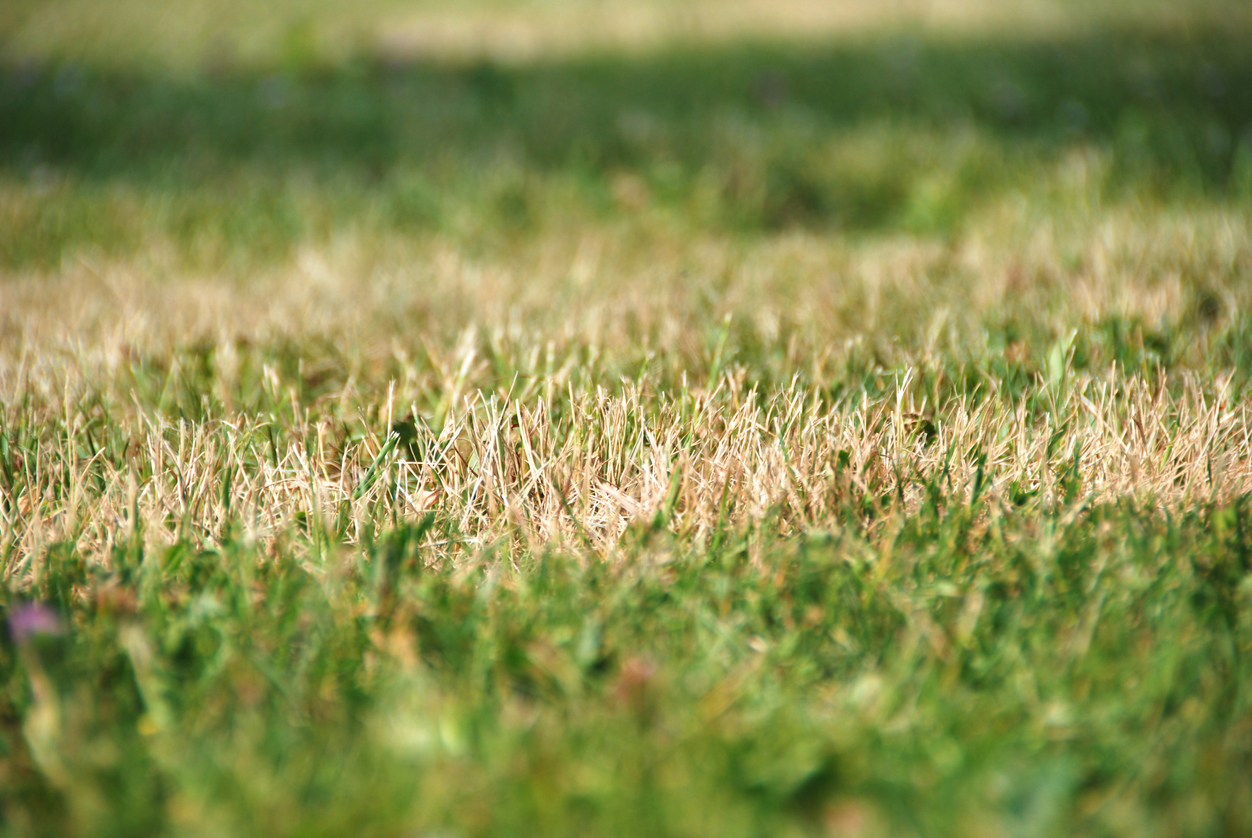
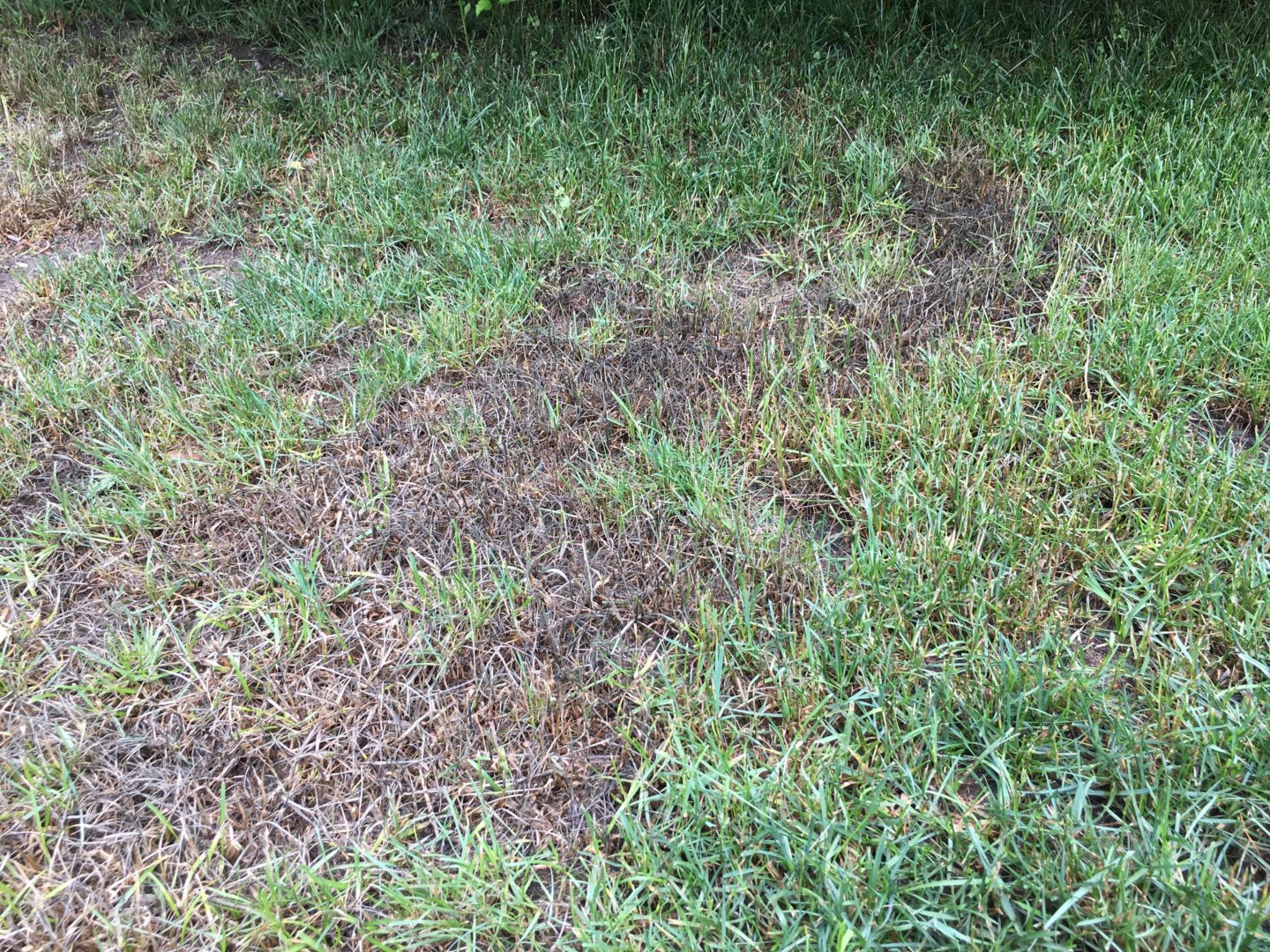
Classic drought stress brought on in June by warm weather and minimal rainfall

Don’t confuse this type of situation with summer diseases which may also be present.  Dollar spot, brown patch, and a hoard of numerous villains await a weak, dry lawn, or one that stays wet overnight due to late watering or humidity.  Drought stress or sun scald can mimic diseases like dollar spot or patch diseases during the summer.  If you are in doubt, have a professional look in order to determine what course of action may be required.

Hot spots in a lawn should receive top priority when it comes to watering

When it comes to watering, anything is better than nothing when it comes to your lawn turning from green, to dull purple, to light tan, to all out brown.  Drought stress, combined with hot weather, can cause a lawn to crash and brown out in mere days if left unattended.  Any irrigation is better than no irrigation in the sense that once your lawn goes brown, it takes weeks to start new growth and push out new green leaves.  Brown grass leaves don’t just rehydrate and turn green for the most part – they are gone and need to be replaced.  Early intervention by watering can either minimize or prevent massive browning if done correctly.  Most turf wants 1” of rainfall per week to continue normal activities.  If you can water in the morning, this is preferred to help minimize disease and evaporation in the day’s heat.  Watering for a soaking is better than a light misting.  In other words, a 1hr soak is better than 15 minutes a day, yet 15 minutes a day is better than no irrigation at all.  Early watering will yield faster results and help the lawn stay green before things turn tan or brown.  Watch for those hazing dull patches, those sections that don’t bounce back after you walk over them so you can still see your footprints.  These are the priority areas that need water versus turf that is still a vibrant green.

Spring Lawn Checklist 2011

Goodbye winter, hello green!

The snow is mostly gone, you may even have a few lingering snow banks that refuse to leave, but for the most part, your lawn is begging for some attention.  Here is a handy spring checklist for your home lawn as you prepare for spring.

1. Plow damage.  It’s been a snowy, rough winter and if you had your driveway plowed, you are likely going to have plow damage.  Chunks of sod and lawn likely got plowed up along the edges and pushed further back onto your lawn.  These pieces of turf chunks may be close to their original location which is now just a scar in the dirt.  If possible, try to put the lawn puzzle back together and place the grass pieces back onto bare soil.  It may well be weeks before anything else can be done and during that time frame, those pieces of grass will start to break dormancy and grow.  Having them at least touching soil is better than mulching your unharmed lawn where they currently reside.  You can always move these grassy sections later and seed as needed into surrounding bare areas.

2. Debris. You may well find gravel, junks of asphalt, branches, leaves, and other debris that simply don’t belong on a grassy surface.  The sooner you can rake and remove this debris, the better.  If the debris is left in its current location, you may not see it during your first mow.  Nothing is more painful than hitting sticks, rocks, and gravel with your mower having been placed onto your lawn by a plow truck.  Leaves left in piles or allowed to matt, especially in shade, will simply mulch any existing grass depending upon its health and density.  The less debris the better.

3. Raking. There are two ways to rake a lawn, one is intentionally damaging- power raking/dethatching, the other is just plain hand raking or using a pull behind tractor implement.  I do not recommend power raking/dethatching unless the lawn has a severe, and by severe I mean a thatch problem- over 1” thick.  Most lawns do not have this kind of depth when it comes to thatch.  As a result, if the average lawn is power raked, it is actually damaged by the process of tearing and cutting.  Since the grass is dormant, and likely stressed by winter ice/snow/cold damage, power raking tears up roots and actually thins a lawn which in most cases is not a desired outcome.  If seeing piles of dead grass blades makes you feel warm inside, you might want to look at a coffee or hot cocoa instead, it certainly will do less damage to your lawn.  I have seen perfectly healthy lawns nearly destroyed by well intended landscapers, only to be called in to repair the damage by overseeding and other processes.  Stick with a hand rake and fluff the lawn up to help it warm and start to grow, or hire someone to do a spring cleanup which includes light raking.  If your lawn has a thatch issue, consider core aeration later in the spring or fall after it has recovered from winter damage.

4. Fertilizer/Crabgrass control. If you are going to use either fertilizer and crabgrass control blended together- don’t put it down too early.  A crabgrass barrier/inhibitor has a limited life span and can easily thin out turf already in a weakened state from winter.  Your best bet is to apply a plain balanced fertilizer to enhance recovery in April, than follow it up with a crabgrass inhibitor in May for maximum results.  This order will accomplish the best of both treatments while not subjecting your lawn to further stress, thinning, or damage.

Prepare your lawn for spring in NH & VT

Soon my friend, soon you will cut again!

Spring is technically only a mere 4 weeks away on the calendar!  Although you are not likely to be planting any vegetables or flowers outdoors close to March 20th, the countdown to spring is on.  In the world of grass, those pesky snow banks are likely to linger well into April in our geographic region.  One can almost taste that first day when the air temperature reaches the mid or upper 50’s only to be surrounded by dark, crusty black snow banks.  Your first instinct may be to grab a rake and cleanup some of the debris left by winter wind and snow plows.  Raking even a small portion of your lawn can be therapeutic, signaling the end of white and the beginning of green.

Further raking will assist in air circulation and a drying of the lawn surface where snow mold, ice, and mice may have caused damage.  Removal of surface debris such as gravel, leaves, and branches will allow sunlight to warm the soil which will in turn stimulate green leaf blades in your lawn.  You may find mole hills as they search for insects and their favorite meal worms- in the top 6 inches of the soil.

Be careful not to apply a crabgrass barrier too soon or at a heavy rate in the spring to damaged or diseased turf.  Such an application can have an adverse affect on recovery and spring seeding/repair plans.  In addition, an early crabgrass barrier will run out of steam that much earlier in the summer, potentially giving rise to annual weeds and crabgrass in July.  One option is to lightly fertilize with a compost tea, sea kelp, or a pure blend of straight fertilizer to enhance recovery in April.  If “crabgrass control” is still a necessity, you still have plenty of time in May to apply such a product and maintain decent suppression.  As always, the best defense against crabgrass or even broadleaf weeds is a thick, healthy lawn resulting from proper cultural techniques in addition to turf health care treatments.

If you have not aerated your lawn in the past few years, or don’t even know what core aeration is, consider aerating this spring.  Core aeration is an effective way to help reduce compaction/thatch while increasing air, moisture, and nutrient availability to the lawn.  Heavy duty commercial grade aerators do a marvelous job at removing plugs and depositing them on the surface due to their heavy weight and large tines.  Overseeding after an aeration is a terrific time to thicken up those thin or weak areas in your lawn.

What large piles of snow mean to your lawn this spring.

Snow banks promote turf damage

Many are wondering what sort of impact so much snow will have on the average lawn come spring.  Generally, a decent snow cover protects your lawn from the drying winds and low temperatures common to winter weather.  However, if that same snow becomes compacted by use such as walking or driving; the grass can be damaged while in a dormant state.  Winter-kill or winter damage can often be attributed to ice formation or compaction through use.  New grass planted the prior season is especially vulnerable since it has not had a chance to mature which may result in thinning or dead patches from a harsh winter.

Snow mold is a more widespread problem resulting in various degrees of turf damage and thinning.  As snow banks recede and the weather warms in March, snow mold can thrive on the surface where the moisture level is just right and the temperature remains cool.  Snow mold has a tendency to matt down grass which is why a gentle raking is so important to help dry out the lawn surface once the sun comes out.  Improving the air circulation at the ground level and helping warm the soil through raking is a basic, yet important spring time task.

Grass which is severely stressed, or perhaps growing in the shade may in fact be further damaged by a pre-emergent crabgrass barrier while in a weakened state.  Most manufacturers of crabgrass barriers recommend a reduced rate or waiting until recovery has begun in May versus a March or April application.  In some situations, providing a basic natural or slow release fertilizer can speed up the recovery time as the soil warms and the material gradually takes effect versus a quick flush of growth from conventional fertilizers.  Since there are many variations to winter kill, ice damage, and snow mold within the same lawn and surrounding neighbors- a single solution is often not practical.  Each lawn should be evaluated individually, not treated with a cookie cutter approach where one product fits all situations.

So, before you apply a hundred pounds of fertilizer mixed with a crabgrass preventer this spring- consider the additional stress you may add to an already weakened lawn.  If you have thin or bare sections created from snow mold or winter kill, once that crabgrass barrier is down, there is no turning back and no seeding until fall.  There is a saying that goes something like “think twice, then think again, then act once” . . .

White grub suppression in your lawn

White grubs, a lawn problem


I say white grub population control because most folks will reach for the rifle the instant they see 1 or 2.  The fact remains that many more grubs should be visible before conducting warfare (9-12/sqft).  There are about 8 major types of grubs in NH/VT that cause turf damage ranging from the classic Japanese beetle to a masked chafer.

As always, the best defense is a good offense.  Healthy turf can withstand root pruning and even minor damage without a pesticide being applied.  Proper cultural practices also help keep your lawn cooler and less desirable to adult beetles like irrigation and a high mowing height.  Overseeding with resistant turf varieties can also help the turf taste less desirable, not necessarily for grubs but their buddies above ground like chinch bugs, sod webworm and such.

New and old research shows us that some compost tea/seed inoculation treatments actually help grass develop its own immune response to reduce damage from both insect and disease activity.  Beneficial nematodes, although not any easy turf treatment; provides 100% organic control by using these microscopic predatory worms in the spring or fall.  Milky spore disease was developed a long time ago to control only Japanese beetle grubs, not the other 7.  Unfortunately, the spores take years to spread/develop and the cold New England winters don’t allow for this disease to function well at all.  

There are new oil blend pesticides which are also organic or natural in composition which show promising results to white grub population control in a lawn setting.  The more traditional pesticides function in a variety of ways and vary in results.  Utilizing newer products over older ones are important to help reduce chemical resistance over time.  When using any pesticide, whether organic or synthetic- it is always important to read the label and use the product at the recommended rates as good environmental stewards.  Using the wrong product for the wrong pest is not only a massive waste of time; it’s a waste of money and most likely will harm beneficial insects.

In summary, there are lots of ways to help your lawn look great, with the best and least environmental impact being the cultural and day-to-day upkeep of the turf.  Integrating resistant grasses during lawn overseeding/establishment and implementing organic or natural bacterial and friendly fungi are super tools with no harmful side effects.  In my opinion, pesticides should only be used as a last resort or when there may be a history of continual damage in a scale that would outweigh the omission of such products.  In other words, a $400 treatment outweighs a $25,000 renovation for sure!

Control measures come back to each of our own expectations and threshold level of acceptable damage.  Are you willing to accept a little damage and forego pesticides or are you more inclined to try some organic options?  Planning now allows you to look at all available control measures since many have a narrow window of application and good results.

Last minute fall lawn projects

A wonderful Turkey on a nice lawn!


Its quarter to Thanksgiving and you are fully engulfed in travel preparations, shopping, and cooking plans.  As the air cools there is little time to make sure your lawn is ready for winter.  Was the last mowing 2 months ago or in October?  Some projects can wait while others should be done before the snow flies!  Here is a quick five step list that is given in order of importance, with 1 being the most important!

5.  Change the oil on your mower, clean the air filter, inspect the spark plug, and lubricate the blade and undercarriage in preparation for an easy first mowing.

4.  Take the time to review your 2011 lawn health care proposal or contract during the winter so come spring time, your turf will receive the care it needs at the appropriate time.  Like reviewing seed catalogs for your garden, lots of planning can be done concerning your lawn during the winter in preparation for a busy spring.

3.  Mark or have your driveway marked with colored stakes along the edge of the lawn so the plow guy minimizes shredding the edges.  Grass growing along a driveway is prime crabgrass growing area, especially if you need to seed in the spring or replace torn up turf chunks.  Nothing says sadness than viewing former pieces of healthy sod upside down with a light gravel coating in April!

2.  Rake and or remove any debris piles.  Piles of leaves, wood, tarps, branches, gravel- anything that stops an air exchange steps up winter kill and dead patches come spring time.

1.  Mow the lawn shorter than usual. 1.5 to 2” is great.  A shorter cut helps prevent leaves from accumulating in piles as the wind moves them across your nicely trimmed, semi- dormant turf.  A shorter cut helps with snow mold and ice damage and provides a faster green up in the spring allowing the sun to warm the soil quicker.

Wishing each of you a safe and relaxing Thanksgiving holiday!

A dirty lawn!

Published by mrgrass2 on November 3rd, 2010 - in Cultural Practices, Misc., Turf Disease

Cut short & remove the leaves before winter!


A dirty lawn covered with leaves and left uncut entering the winter is at great peril for winter damage.  Besides blocking sunlight in the late fall before snowfall, leaves restrict normal air circulation and the ability of the lawn to dry out.  Even small piles of leaves can mulch or weaken your grass in mere weeks if left uncollected.  Those same piles or heavy leaf cover will freeze and inhibit air circulation under the snow- a recipe for disaster.  A clean lawn is a happy lawn!

Now is not the time to retire your mower in early November, especially if the grass is still over 3 inches in height.  Your lawn has the potential to still grow another inch or more before snowfall and that added length predisposes your turf to snow mold!  Matted, wet turf is an ideal habitat for mice, snow mold, and ice damage.  Do yourself a simple favor this weekend or afternoon, cut your lawn down to 1.5” and help give your grass an edge going into winter.  No one likes a dirty lawn!  Clean up your lawn today and sleep well tonight!

© Copyright 2009-2012 Chippers, Inc. All Rights Reserved.