The link below activates a short video for your viewing enjoyment.
Demonstration of spraying compost tea on a lawn
The link below activates a short video for your viewing enjoyment.
Demonstration of spraying compost tea on a lawn
As Labor Day approaches, you are likely forced to think about school resuming and the sad state of affairs with your lawn. If you have an average lawn in New Hampshire or Vermont, you are likely going to find fat broadleaf weeds like plantain, dandelions, and clover among a host of other weedy villains. Let us not forget to give tribute to the massive crop of crabgrass which has now grown into your driveway, patio, and walkway cracks! You my friend have lawn problems! What to do? There must be something that can be done!
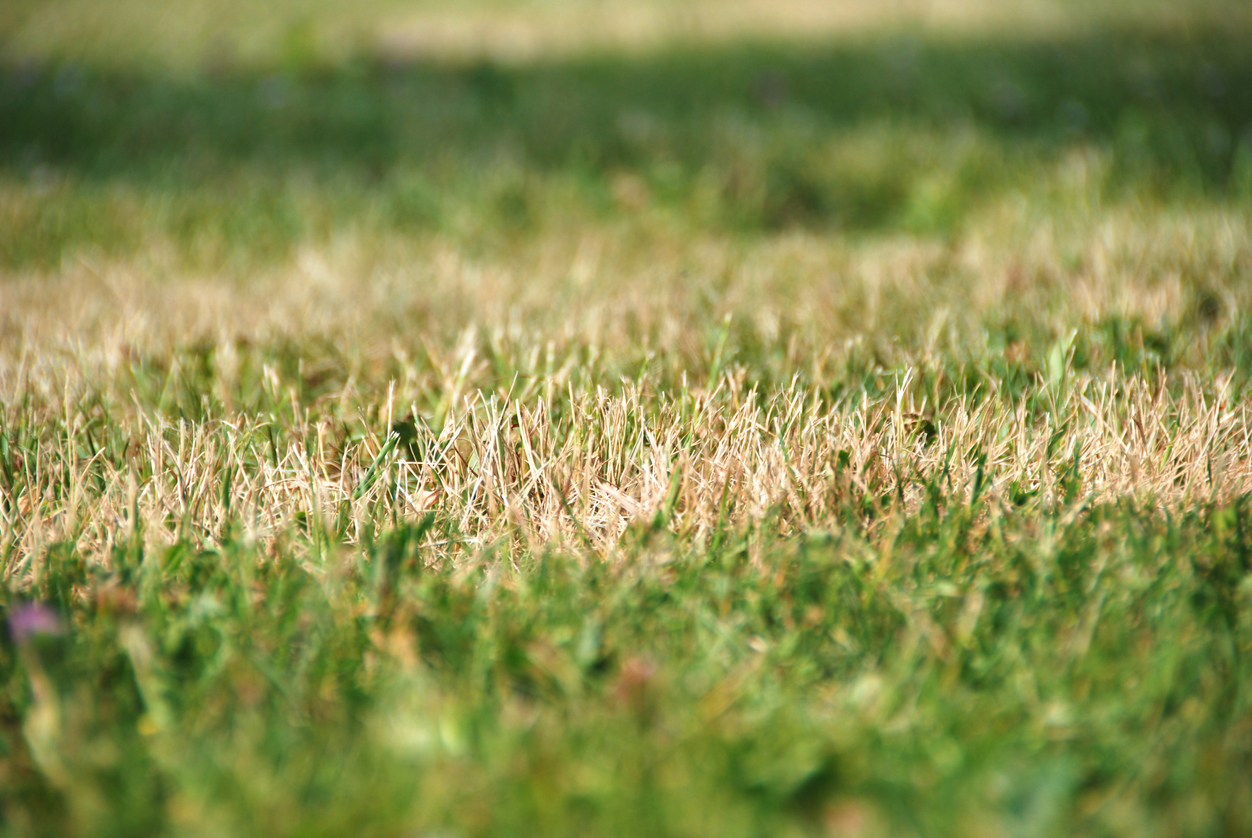
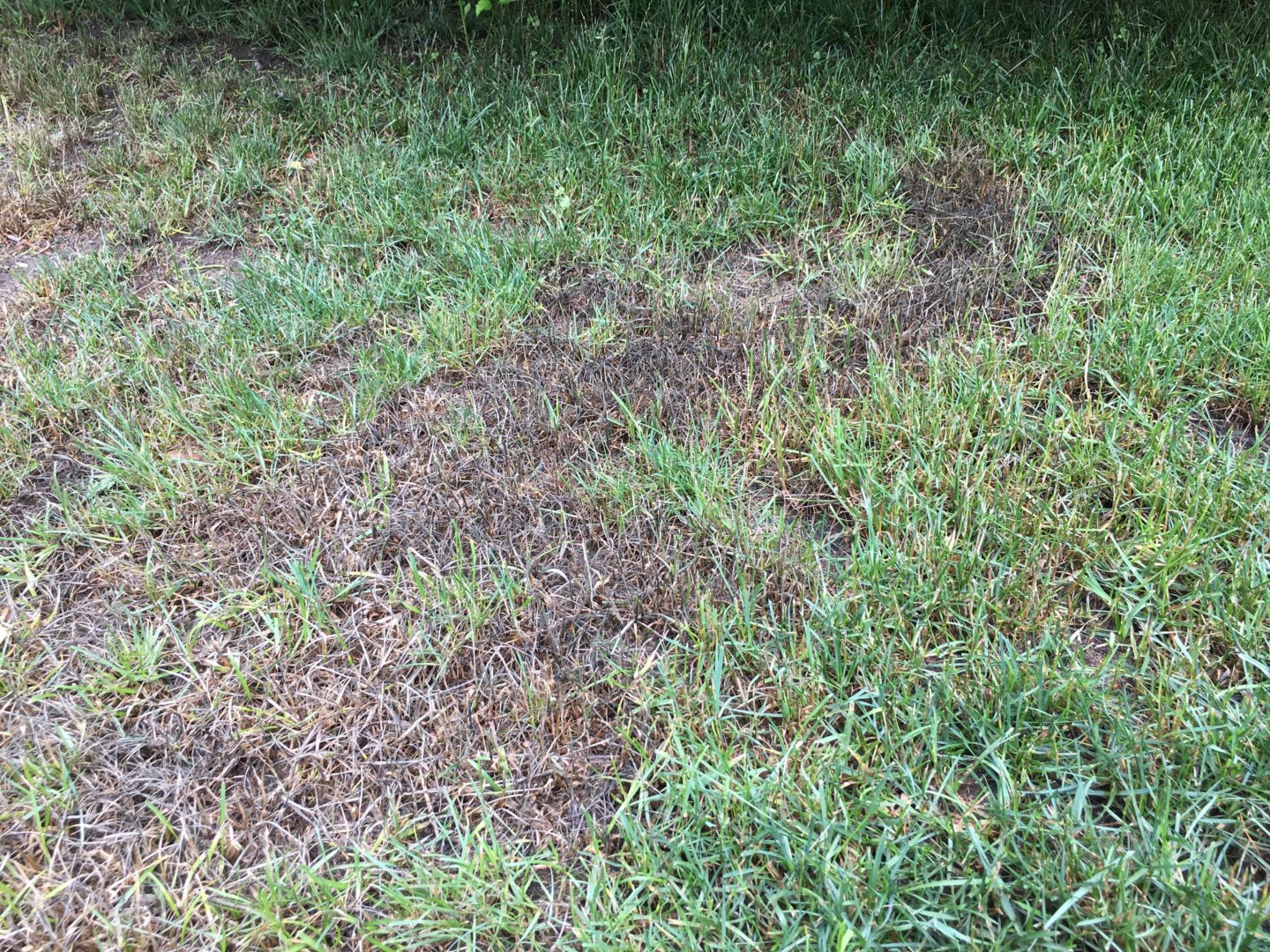
If you attempted to treat for weeds this summer, your efforts were most likely in vain due to high temperatures and dry conditions. Broadleaf weeds are best reduced when they are actively growing which usually occurs with cool fall or spring weather when soil moisture is adequate. Any summer spraying usually just causes the surrounding turf to brown under the stress and the weed itself might look a worse for wear but does not die. This year brought such unusually hot and dry weather, attempting to keep a lawn free of weeds and especially crabgrass seemed like spraying a house on fire with a garden house. While proper mowing does help, irrigation became vital if your well supported the flow or your town did not put a watering ban in effect. Brown grass caused the soil to heat up quickly where dormant crabgrass and annual weed seeds popped up and grew overnight, basking in the hot noon sun. That is the past and explains why your lawn may look the way it does today, even with professional care.
Moving forward, you have two main options, renovate and repair damaged lawn areas to regain lost lawn or go after the weeds once we get cooler, wetter weather. My advice to most folks is to aerate and seed in the fall and repair any lawn damage without the pressure of crabgrass and annual weeds, that are now dying (something about them dying in the fall). With reduced competition, fall becomes the best time to overseed and aerate a lawn after a brutal New England growing season. Go after the weeds next spring when seeding is less effective and crabgrass lurks, just waiting to over run your best efforts in lawn repair. There is little time now to spray for weeds and seed, given most weed control products have a one month waiting period before seeding is recommended. My advice for the average home owner is to get as much grass back now and then deal with the weeds next spring. Try improving the soil quality by adding sea kelp or compost tea to get an edge next spring. The next few months are critical and should be taken full advantage of if you really want to make a difference in your home lawn; not only this fall but to set the stage for the entire growing season of 2013!
Grubs in your lawn right now and into the fall are likely hidden beneath brown grass. While crows and skunks may alert you to this lawn problem, grubs are growing fat thanks to the hot, dry summer. Grubs destroy the root system (or whatever it is they do!) so it is important to take action against this lawn pest. What is a home owner to do?
Take action this fall before winter arrives. To reduce the grub population, your lawn can be sprayed several times with cedar oil for an organic approach or more traditional products can be applied. One hundred percent control should not be expected since the larger the grub, the harder they are to knock down. Any reduction in the population will be helpful, especially if you have animals digging on a nightly basis. The same method of grub reduction can be employed next spring for additional results. I do not normally endorse wide spread use of preventative action toward insects in general, mostly because in a normal year insects are usually kept in balance. However, this dry, hot year is anything but normal, so added control measures are certainly prudent. The best approach for lawns with a history of insect damage would be to consider a preventative treatment in 2013 which will provide the highest degree of satisfaction.
If your lawn has experienced severe damage, renovations are better done this fall including seeding, topdressing, liming, and fertilizing to help set the stage for 2013. Failure to repair damage this fall means you miss out on warm soil, cool nights, and generally warm days; ideal grass growing weather. An added bonus is the absence of annual weeds and crabgrass which will not interfere with fall seeding results compared to waiting for the spring of 2013 when they will thrive. In general, seeding is best done in the fall because of these important factors.
If you suspect your brown lawn has more than a water issue, give your local turf expert a call and get it checked out before you carve that Halloween pumpkin!
Anyone who is in the professional lawn care business, and by that I mean lawn healthcare, is aware of compost tea. Lawn treatments such as fertilizing, lime, weed & insect control have always been a staple in the efforts toward improving and managing turf grass in a residential or commercial environment. There is a new school of thought that focuses not on improving or protecting the grass plant itself, but the soil it lives in. Although this is not a radical thought, it is certainly a departure as it focuses on the issues at hand in the soil versus treating the signs or symptoms of unhealthy lawns; mainly the grass itself or some pest. Since so many issues in a lawn can be attributed to poor soil conditions, compost tea has risen as one means to improve the soil which then promotes healthy grass. Although not a quick cure all, the strategy here is to add bio-organisms into the soil which then help break down organic matter, thus lending to natural “fertilizer” production. Although this is over simplified, adding bacteria and fungi into any lawn has lots of benefits.
Compost tea is usually a blend or mixture of different kind of bio-organisms, many which have been reduced or lost in the soil due to a variety of issues. Some of these issues include, but are not limited to, high salt content from extensive manufactured fertilizer use, poor soil, and or use of weed and insect controls over time. If we go back to basic high school biology, we find that soil is a living eco-system. As such, soil is influenced by what is put into it such as fertilizers, or removed, such as grass clippings(versus mulching). Protozoa, bacteria, and fungi all live in specific concentrations to help break down organic matter and pollutants in the soil substructure. Anything that is applied to a lawn will move below ground and affect these biological populations. When these organisms can be easily destroyed by any number of means, you can expect that the natural cycle of life is broken, resulting in a broken lawn and the entire ramifications one can expect from such actions. Salt toxicity is a common occurrence by the overuse of fertilizers. Highly soluble nitrogen along with potassium salts lend to reducing or even eliminating beneficial organisms in the soil beneath your lawn. Compost tea is meant to not only add organic matter to the lawn, but to help rebuild those fragile, damaged micro-ecosystems which may have been reduced due to prior lawn treatments. Adding bacteria, fungi, and in some cases protozoa, helps rebalance how nitrogen and other valuable nutrients are slowly added around the turf root system for a more uniform supply of “food” if you will.
Remember, nutrients are technically not food for any plant as they manufacture real food from the sun through photosynthesis, not from fertilizers. Fertilizers only help provide some building blocks which improve the plants ability to fight off harm such as disease, insects, and stay greener so it can grow healthier. This explanation is over simplified, but for the sake of a blog article, it will do just nicely.
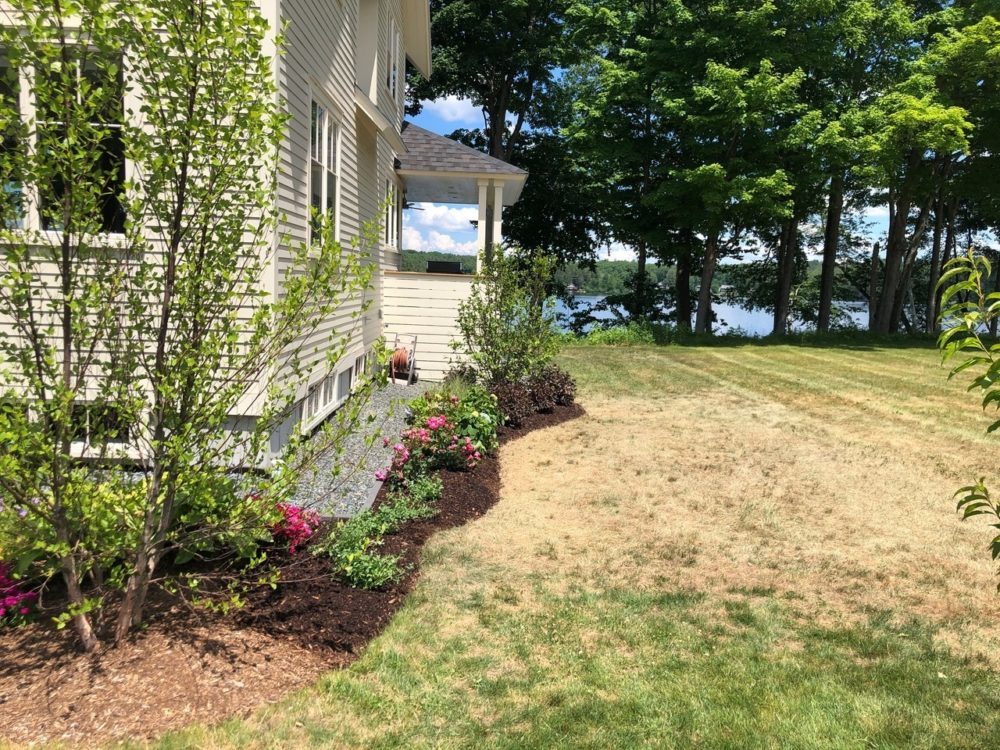
Compost tea then, is a rescue line toward saving and improving your soil. Instead of targeting the issue at hand, whatever it may be from poor color, to a disease, or poor grass density; compost tea seeks to correct the underlying issues in the soil versus what you see above ground. Only by focusing on improving the soil can we ever achieve a truly healthy lawn with a decreased demand on fertilizer and other artificial stimuli. The lawn pictures included in this blog post have only received one natural fertilizer treatment in the spring plus several compost tea sprays and kelp. With the client’s good mowing and watering habits, it is clear that this is a great looking lawn, especially in August when most lawns are dormant and full of crabgrass and or broadleaf weeds due to record heat in 2012.
Compost tea can be done at any time of the year and is known to be especially valuable in the spring to jump start the soil biology after a cold winter. I like to use compost tea after seeding to increase germination, disease resistance, and promote healthy growth. Compost tea increases organic matter, stabilizes a soil system beneath the lawn, and helps prevent issues by replacing lost organisms around the grass roots to create a more natural balance. Compost tea is clearly valuable when used with sea kelp, natural fertilizers, and lime. Everyone should consider tea not only for a cold summer drink, but for your lawn.
Before you buy grass seed this fall, be sure to know what types you are buying and where you plan on using them around your house. Failure to know common grass seed facts can mean the difference between success and failure. The differences in grass varieties are as wide as a sports car is to a truck, they each have advantages but both have down sides too. Such is the case with grass seed, some tolerate shade, others prefer full sun while others are best used for heavy use or dry conditions. Each grass type has its own set of characteristics and knowing these can be a huge advantage in growing a healthy lawn. This is why blends exist, several different grasses mixed in one blend to cover a wide array of growing situations. The dilemma arises when the wrong grass type or even a blend is used when the proper grass selection would be more successful. Shopping for grass seed is not an easy task and the packages are anything but cheap. A little research and knowledge before your purchase can save you not only money, but time.
Since fall is the best time to seed, I am going to review the basic turf types and hopefully you will be enlightened enough to use this to your advantage in improving your own home lawn. I have found that few people know how much seed to use, and they either put down too much or the wrong kind; perhaps even both!
In New England, we like to grow what we call “cool season” grasses which prefer temperatures in the 50’s to 70’s. Anything approaching 90 causes heat stress resulting in browning or white sun scorch. These grasses include Kentucky bluegrass, perennial ryegrass, annual ryegrass, fine fescue, tall fescue, and bent grass. Within these grass types, there are many hybrid types, each with their own resistance to disease, drought, shade, insects, and ability to handle wear and then recover. As you might expect, choosing the right grass seed is extremely important, especially when picking out a blend based on facts versus how pretty the package looks. Bottom line, you pay for what you get when you buy grass seed. If you buy cheap grass seed, you are likely purchasing old seed or annual grass which means come winter, your grass dies and you get to start over again next spring.
Kentucky bluegrass has great color, good density, but takes 21 days to germinate and only has fair wear and shade tolerance. This is why planting sod that is comprised of mostly bluegrass in the shade is not a good decision because it will simply thin out and eventually need seeding with the right grass such as a fine or tall fescue. Kentucky bluegrass has only fair wear tolerance, but compensates with good recovery abilities when injured. Bluegrass creates thatch and requires regular aeration to keep in good health. Kentucky bluegrass is a very small seed with over 1 million per pound, so while you only need 2lbs per thousand square feet, its small size and desirable characteristics makes its per lb price very high.
Perennial ryegrass works best when used in overseeding in an existing lawn since it works well with most other grasses. Unlike bluegrass, both perennial and annual ryegrass have good wear tolerance but has a tough time recovering if damaged. Perennial ryegrass seed is fairly large ranging in only ¼ million seeds per pound. As a result, you need at least 8lbs per thousand square feet to seed your lawn versus 2lbs of Kentucky bluegrass. Perennial rye is sensitive to cold winters and ice so be careful where you let snow build up along walkways. Annual ryegrass is best used where erosion might be a problem and a quick cover is required, same for perennial as these grasses germinate the fastest of the bunch.
Tall and fine fescues are the last main grass types to review. Tall fescue is great on sports fields, high-use traffic areas, and has good drought tolerance. Tall fescue has a thicker blade but newer hybrids this is not as noticeable because certain home owners do not like the wider blade found in tall fescue. Older varieties of tall fescue are often mistaken for grassy weeds in a manicured lawn because of their clump growth habit and wide leaf blades. Tall fescue is the largest of grass seeds and again comes in at a little under ¼ million seeds per pound with the same seeding rate as perennial ryegrass. Tall fescue does fairly well in shade, so if you have had trouble before, give this turf a try.
Fine fescue is a soft, thin-bladed cousin to tall fescue and is often well suited for partial shade or in a blend with bluegrass, as the two do well together. Fine fescues come in a variety of names like hard, chewing, or even red. Most do not like wet soils but can do well in dry shaded situations. Fine fescue is not the grass to use alone in full sun or as a sports turf given its nonexistent tolerance to wear. Fine fescue has under ½ million seeds per pound, so normal seeding ranges from 2-4lbs per thousand square feet.
Bentgrass is not considered a desirable turf in a home lawn due to its growth habit. Bentgrass requires a very short cut to ¼ inch while most lawns require a 3” cut; such a low cut would promote a wonderful bentgrass putting green but ruin a normal lawn. This is because bentgrass puts out leaves where it is cut, up top unlike other grasses which put up leaves from the base down at the ground level. This different growth habit makes bentgrass ideal for golf course use but makes it a weedy grass in a home lawn, often found in small patches which appear lime green in color with brown stems.
In general, each of the grasses above is best used in conjunction with each other in specific blends for optimum use. By evaluating your lawn’s growing environment, it is much easier to pick an appropriate grass blend which will do well once planted. The key lies in the percentage of each specific grass in a given blend. While you can buy any of these grasses alone, you can find great blends which are suited to some of the conditions described such as play, shade, or full sun. Most grasses you will find in a hardware store are found in specific blends or by name. The key to finding the right grass varieties lies on the label where they are listed by percentage of the mixture. Just liking reading a label in the supermarket, you have to read the label in order to determine what you are actually buying. Purchasing a grass blend just because it says “patch mix” or “play blend” can be misleading and may actually get you the wrong grass for your situation. Only by reading the label on the blend can you properly tell what grasses you are actually buying. In general, you get what you pay for when it comes to seed pricing so don’t skimp on quality or quantity!
In my business I use four to five different blends of grasses with each containing four to five specific grass types. This is necessary for the variety of lawn applications, such as overseeding, and complete lawn installations while keeping in mind the site requirements. Choosing the right grasses is very important for long term success of your lawn ecosystem. Failure to over seed this fall, in order to add more turf to a damaged lawn system, can mean the difference of a great lawn in 2013 or just surviving. Given that New England has experienced a record setting heat wave this past summer, it makes solid agronomic sense to plan on some kind of seeding in the fall of 2012.
Address the weak or damaged spots in your lawn this fall before its time to carve the turkey dinner, because by then, it’s all stuffing!
Summer is beginning to fade as August begins and soon school buses will be back on the roads as Labor Day approaches. Your heat-ravaged lawn would do well to get in on the end-of-summer shopping extravaganza. Although notebooks and new clothes are not appropriate, core aeration will break up the compacted soil caused by drought and is definitely what the teacher ordered. And warm soils and cool nights beckon new seeding to repair damaged sections of your lawn. This over seeding is best done after aeration so the seed can germinate in the core holes. For those areas too large for a minor fix up, topdressing with compost is just the ticket to supply organic matter and a superior seed bed after core aeration.
Fall is the best time of the year to work on your lawn, especially when it comes to seeding because of increased rainfall, warm soil, and cool nights. There is less competition in your lawn as summer annuals like crabgrass and spurge are on their deathbeds. And every lawn can benefit from core aeration regardless of condition or age. Simply put, fall is summer in reverse as the weather begins to feel like spring except with a splash of vivid foliage color to make a great outdoor backdrop for family activities.
Aeration can normally begin in August as soon as there is sufficient soil moisture to allow the hollow tines of the machine to break through the hard surface. Dry soil often does not allow good plugs to be pulled as the soil falls apart or it is difficult to penetrate from compaction caused by dry summer weather.
Over seeding allows better grasses to be introduced into your lawn so it can become more resistant to disease, insects, and drought. You may have grasses which prefer partial shade living in full sun. Fall is a great time to add a better grass to this kind of area. Perhaps you have an older bluegrass that is not tolerant to disease; now is the time to seed in superior hybrid turf grasses that are resistant to disease yet blend in with your bluegrass lawn. Don’t skimp on seed quality, like fine wine, you get what you pay for and using subpar seed to save money will detract from the overall results.
The grass seed in the aeration holes needs no special care. In fact, you should continue your normal mowing routine. Topdressing will aid in the thickening of the lawn because the seed is delivered into the holes and on the lawn surface. Any supplemental moisture for both over seeding and topdressing will promote maximum grass seed germination although it is not required for good results under normal autumn weather. Too much moisture is often called “killing your lawn with kindness” and can be worse than not watering at all.
Core aeration and over seeding are an excellent pair of lawn renovation activities which do so much good, especially after a dry year when many lawns had some drought or disease damage.
When you hear those back to school advertisements, don’t forget to help your lawn looks its best before winter arrives. Don’t let this opportunity pass you by.